


From the Publisher: The land surrounding the confluence of the Allegheny, Monongahela, and Ohio rivers has supported communities of humans for millennia. In the past four centuries, however, it has been transformed utterly and many times over by the people who call it home. In this brief, lyrical, and idiosyncratic new book, Ed Simon follows the story of America’s furnace through a series of interconnected segments, covering all manner of Pittsburgh-beloved people, places, and things, including:
Paleolithic Pittsburgh The Whiskey Rebellion The attempted assassination of Henry Frick The Harmonists The Mystery, Pittsburgh’s radical, Black nationalist newspaper The myth of Joe Magarac and Billy Strayhorn, Duke Ellington, Andy Warhol, and much much more
An Alternative History of Pittsburgh is a must-read for anyone curious about this storied city, and for Pittsburghers who think they know it all-too-well already.About the author: Ed Simon is a staff writer for The Millions and a contributing editor for the History News Network. He is the author of several books, most recently Printed in Utopia: The Renaissance’s Radicalism. His essays have appeared in The Atlantic, The Paris Review Daily, The Washington Post, Newsweek, Poetry, McSweeney’s, Aeon, Jacobin, Salon, The New Republic, and The New York Times among dozens of others. A native of Pittsburgh, he currently lives in northern Virginia.
“Simon tells the story of the city and all the changes that made it what it is today in a way that’s entirely new, by the hand of someone who is deeply familiar. Simon shines a light on things often forgotten, and uncovers untold stories in the process.”—Juliana Rose Pignataro, Newsweek‘s “21 Best Books to Read This Spring”
“[A] rich and idiosyncratic history…. Simon marshals his historical snapshots into an incisive survey of the region and its inhabitants. Even Pittsburgh history buffs will learn something new.”—Publishers Weekly
“An Alternative History of Pittsburgh is nothing short of an epic, a sprawling history of a city that is as complex and polyphonous as America itself. Simon, whose history with the city goes deep, serves as a brilliant guide to this terrain, traversing a network of intersecting stories with lyricism and novelistic verve, calling our attention to what has been forgotten and overlooked, and discovering the numinous where you’d least expect it. The book is at once a love letter, a reckoning, and an insurrection against familiar narratives about the Rust Belt, reminding us why this city and its history remain so urgent today.”—Meghan O’Gieblyn, author of Interior States
“In An Alternative History of Pittsburgh, Ed Simon deftly peels back the city’s many layers to reveal revolutionary moments. How is it possible that one locale could house a 19,000-year old settlement and the roots of the pop art movement, a utopian community and the mansions of gilded age robber barons, the first Republican National Convention and the first supermodel? For Pittsburghers, this is an illuminating exploration of the city you thought you knew. But even if you’ve never set foot in Pittsburgh, this book is a brilliant look at how geology and art, politics and religion, disaster and luck combine to build America’s great cities—one that will leave you wondering what secrets your own hometown might be hiding.” —Anjali Sachdeva, author of All the Names They Used for God
1938: Billy Strayhorn Meets Duke Ellington
 When the prodigy Billy Strayhorn first met Duke Ellington on a December evening in 1938, introduced to the band leader in the latter’s dressing room backstage at the Stanley Theater, he was only twenty-three. Fifteen years the junior of Ellington, who was already dubbed the “King of Jazz” by the national Black newspaper the Pittsburgh Courier, Strayhorn was a slight, skinny, bookish, effeminate man who paid his bills by working at a Point Breeze pharmacy as a soda jerk. A circuitous work connection is what allowed Strayhorn to meet Ellington, who was used to the admiration of young fans. Strayhorn already had a reputation as a talent in Pittsburgh’s jazz scene, having written a sophisticated classical composition that was played at his graduation from Westinghouse High School five years before—he’d since gone on to compose and arrange for a local jazz ensemble with the name of the MadHatters.
Now in downtown Pittsburgh, only a few miles from clubs like the Sawdust Trail and the Crawford Grill (sponsor of the Negro League baseball team that bore their name) that lined Wylie and Centre Avenues in the Hill, and which earned that neighborhood the sobriquet “the Crossroads of the World” by the Harlem Renaissance poet Claude McKay, Strayhorn would formally meet the most famous American composer. Strayhorn confidently sat at the piano, and with perfect verisimilitude was able to imitate Ellington’s songs like “In a Sentimental Mood” and “Caravan,” and to then demonstrate the ways in which their arrangements could be improved. Then the twenty-three-year-old soda jerk performed some of his own compositions. Ellington, immediately recognizing Strayhorn’s genius, and true to the democratic ethos of jazz itself, invited the younger man to New York so they could collaborate. Strayhorn jotted down Ellington’s directions uptown, with the line “Take the A Train” becoming the title of his most famous song, and the theme of the orchestra itself.
The two would forge the most productive creative partnership of the twentieth century. Strayhorn would compose and arrange standards for Ellington’s orchestra, including “Satin Doll” and “Lush Life.” Despite Strayhorn’s relative anonymity, Ellington always acknowledged the talent and genius of those contributions. David Hajdu writes in Lush Life: A Biography of Billy Strayhorn that the musician, who wrote “hit songs, jazz pieces, concert works, film scores, music for a Broadway show,” was often viewed as “Ellington’s alter ego” who “wrote in a style so akin to Ellington’s that few people could distinguish their work.” Debates have long raged between those who view Strayhorn as fundamentally a rustic who was tutored by Ellington, and those who see him as the musical power behind the throne. “Promulgated for years,” Hajdu writes of both sides, and “none of this turned out to be so simple.” As an arranger, Strayhorn was unparalleled, and Ellington would declare that he was “my right arm, my left arm, all the eyes in the back of my head, my brain waves in his head, and his in mine.” To reduce either man’s contributions is to fundamentally misunderstand jazz and the nature of collaboration, what critic Ted Gioia describes in The History of Jazz as being the case where Strayhorn “became a true partner, playing a pivotal role in shaping the band’s sound.”
Strayhorn was urbane, elegant, sophisticated, and openly homosexual; the lyricist who in “Lush Life” could write that “I used to visit all the very gay places / Those come what may places / Where one relaxes on the axis of the wheel of life / To get the feel of life… / From jazz and cocktails.” Though classical music was his first love, it was an impossibility that a Black man of his generation could build a career in that elitist realm, but he brought a symphonic sensibility to his collaborations, including Ellington’s Black, Brown and Beige, which premiered in 1943 at New York’s Carnegie Hall. Despite a cosmopolitan life in New York and Paris, it was the Black community in Pittsburgh that birthed Strayhorn: the Homewood where he was educated (once answering that all of his genius was learned in high school) and the Hill District where he first became conversant with jazz.
When Pittsburgh’s neighborhoods were filling with immigrants from places like Vilnius, Krakow, and Naples,there were also thousands of Black Americans arriving from the areas around Birmingham, Atlanta, and Greensboro (Strayhorn’s maternal family was from North Carolina) as part of the Great Migration, the single-largest internal movement in American history. Journalist Mark Whitaker notes in Smoketown: The Untold Story of the Other Great Black Renaissance that the community these migrants built in the Hill District was “for a brief but glorious stretch of the twentieth century, one of the most vibrant and consequential communities of color in U.S. history.” Central to Black life in Pittsburgh was jazz, and as the city was almost equidistant from New York and Chicago, it became a regular part of the circuit of musicians who performed in its clubs night after night.
The Hill’s clubs were not just a stage for visiting musicians, but for the city’s own performers, with Whitaker celebrating this “black version of the story of fifteenth-century Florence and early-twentieth-century Vienna: a miraculous flowering of social and cultural achievement all at once, in one small city.” Over the next few decades, Hill District clubs would be the university for a cadre of Pittsburgh jazz performers, including not just Strayhorn, but singer Billy Eckstine, pianist Erroll Garner, pianist Mary Lou Williams, drummer Art Blakey, trumpeter Roy Eldridge, pianist Ahmad Jamal, drummer Kenny Clarke, bassist Paul Chambers, bassist Ray Brown, and the great platonic love of Strayhorn’s life, the singer and actress Lena Horne, who claimed that had the composer not been gay, she would have surely married him.
What resulted was America’s greatest cultural contribution: our own indigenous music. In the canonized realm of those who contributed to that mission, Strayhorn is an invaluable member of the pantheon. Conventional wisdom has configured Strayhorn as dwelling in Ellington’s shadow, but that’s an incomplete understanding of his significance. The two were halves of a greater talent, they were twined aspects of the same personality, the same inspiration, the same genius. And the songs—the melancholic pining of “Lush Life,” the sultry eroticism of “Satin Doll,” the sheer, joyful expression of “Take the A Train,” a composition that said so much about American modernity.
“I’ll live a lush life in some small dive,” wrote Strayhorn, “And there I’ll be / While I rot with the rest / of those whose lives are lonely too.” It was esophageal cancer that would take him in 1967, exacerbated by years of alcoholism, the only thing that he’d inherited from his father. Two years later and Ellington would release an album in his partner’s honor entitled . . . And His Mother Called Him Bill. The last track was recorded by accident, Ellington performing Strayhorn’s composition “Lotus Blossom” unaccompanied on piano while the rest of the band members packed up their instruments and left the studio.
Excerpted from An Alternative History of Pittsburgh, by Ed Simon (Belt Publishing, April 2021).
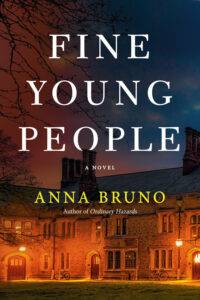
From the Publisher: "In this “smart, irreverent secret history” (Stewart O’Nan) Sewickley set novel by highly praised Pittsburgh native author Anna Read more
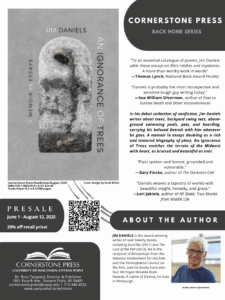
From the Publisher: "In his debut collection of nonfiction, Jim Daniels writes about trees, backyard swing sets, above-ground swimming pools, Read more

New York, NY — The Community of Literary Magazines & Presses (CLMP), the national nonprofit organization that for 58 years Read more
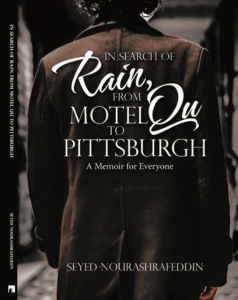
From the Publisher: "Imagine that you are a child who was born in a large family, and during your childhood, Read more

From Mt. Lebanon Magazine by way of Facebook: "On February 18, the Mt. Lebanon Public Library Board of Trustees passed Read more

"The Drue Heinz Literature Prize recognizes and supports writers of short fiction and makes their work available to readers around Read more

"Applications are now open for Read Local Eat Local 2025! This is event is on Saturday, September 6, from 11 Read more
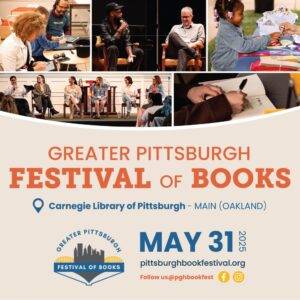
PITTSBURGH, PA – It’s time to book your spot! Registration for the 2025 Greater Pittsburgh Festival of Books is officially Read more

"The Northern Appalachia Review welcomes submissions of poetry, fiction, and nonfiction written about, representing, or engaging with the experience of Read more
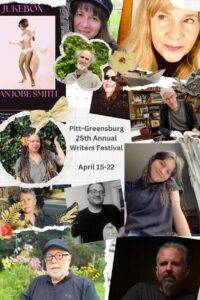
But this too is true: stories can save us The writer Tim O’Brien calls storytelling an essential human activity. "The Read more
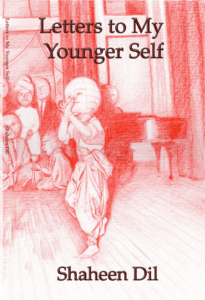
"'Where do you end and I begin?' is the question which haunts Shaheen Dil’s remarkable memoir-in-poems. Dil’s journey is at Read more

City of Asylum Pittsburgh and International Cities of Refuge Network (ICORN) collaborate to present 30+ free,transformational events over 4 days Read more
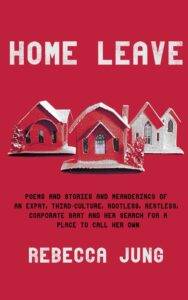
From the Publisher: "In 1958, a midwestern family was uprooted from Canton, Ohio to Bukavu in the Belgian Congo during Read more
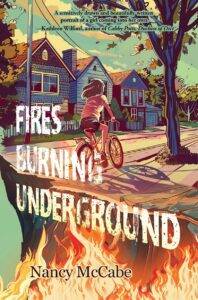
From the Publisher: "It’s Anny’ s first day of middle school and, after years of being homeschooled, her first day Read more

"A light snow fell on January 30, 2005, a typical cold Pittsburgh winter morning. Inside Calvary, the congregation had gathered Read more
We are so excited to help spread the word about the excellent Woolly Bear Books and Gifts in Carnegie, PA Read more
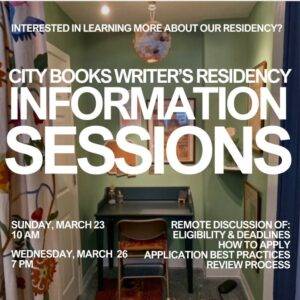
"If you have considered applying to the CBWR, or have applied in the past and not been selected, this remote, Read more

We're happy to share that Pittsburgh's International Poetry forum is sharing their latest events and performances on YouTube, where you Read more

StoryZ, a Latrobe-based theatre company founded by Artistic Director Dr. Stephen A. Schrum, announces its production of Labor’s Martyr: The Read more

ALL SKATE: True Stories from Middle Life is a series of musings from one mid-life woman, wife, and mother on what Read more
