

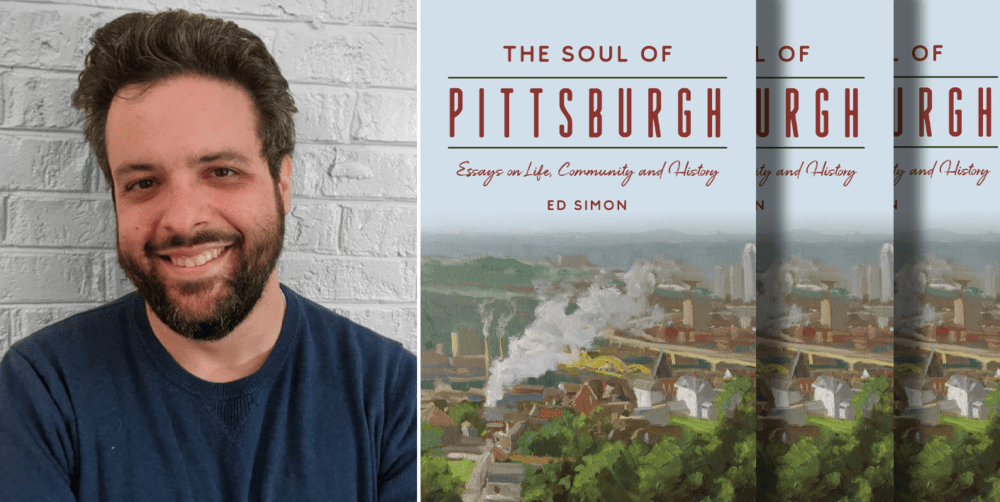
From the Publisher: “A shot-and-a-beer-town, a drinking town with a sports problem, a gruff, no nonsense, working class, blue collar town. Pittsburgh has long functioned as a symbol for a particular manner of talking about class and capitalism in the United States, but such simplistic narratives rendered in black and gold have long had a way of obscuring complexities, ironing out differences, and muting particular voices. More recently, local leadership has championed the promise of a ‘Pittsburgh miracle,’ the similarly simplistic myth which holds that education and the health industry – eds and meds – will replace heavy industry and ensure the city’s status as the ‘Most Livable City in America’ (though who it is most livable for can sometimes be obscure). Crucially, Pittsburgh itself is far more interesting than any of these contrasting narratives would allow for, a complex and contradictory city that embodies the nation of which it is representative. A place which is both ugly and beautiful, provincial and cosmopolitan, conservative and radical. Most of all, a place that is profoundly weird, and all the more glorious because of it. The Soul of Pittsburgh combines the essayistic and the journalistic as a native son explores what exactly it means to be a Pittsburgher, this contested identity which is so often reduced by both media and politicians, especially in an era that is no longer defined by the heavy industry which was once synonymous with the region.”
More info About the Author: Ed Simon is the Editor-in-Chief for Belt Magazine, an emeritus staff writer at The Millions, which the New York Times has called the “indispensable literary site,” as well as being a monthly columnist for both 3 Quarks Dailyand LitHub. Simon is the author of over a dozen books, including An Alternative History of Pittsburgh from Belt Publishing and Pandemonium: A Visual History of Demonology, a work of illustrated nonfiction released by Abrams. Currently he is finishing, among other projects, the first full cultural history of the Faust legend for Melville House publishing. His essays have appeared in The Atlantic, The Paris Review Daily, The Washington Post, Newsweek, Poetry, McSweeney’s, Aeon, Jacobin, Salon, The New Republic and The New York Times among dozens of others. Since 2022, he has been a proud member of the board for Autumn House Press, the venerable Pittsburgh-based non-profit publisher of fiction, non-fiction, and especially poetry as well as serving on the Advisory Council of the International Poetry Forum.
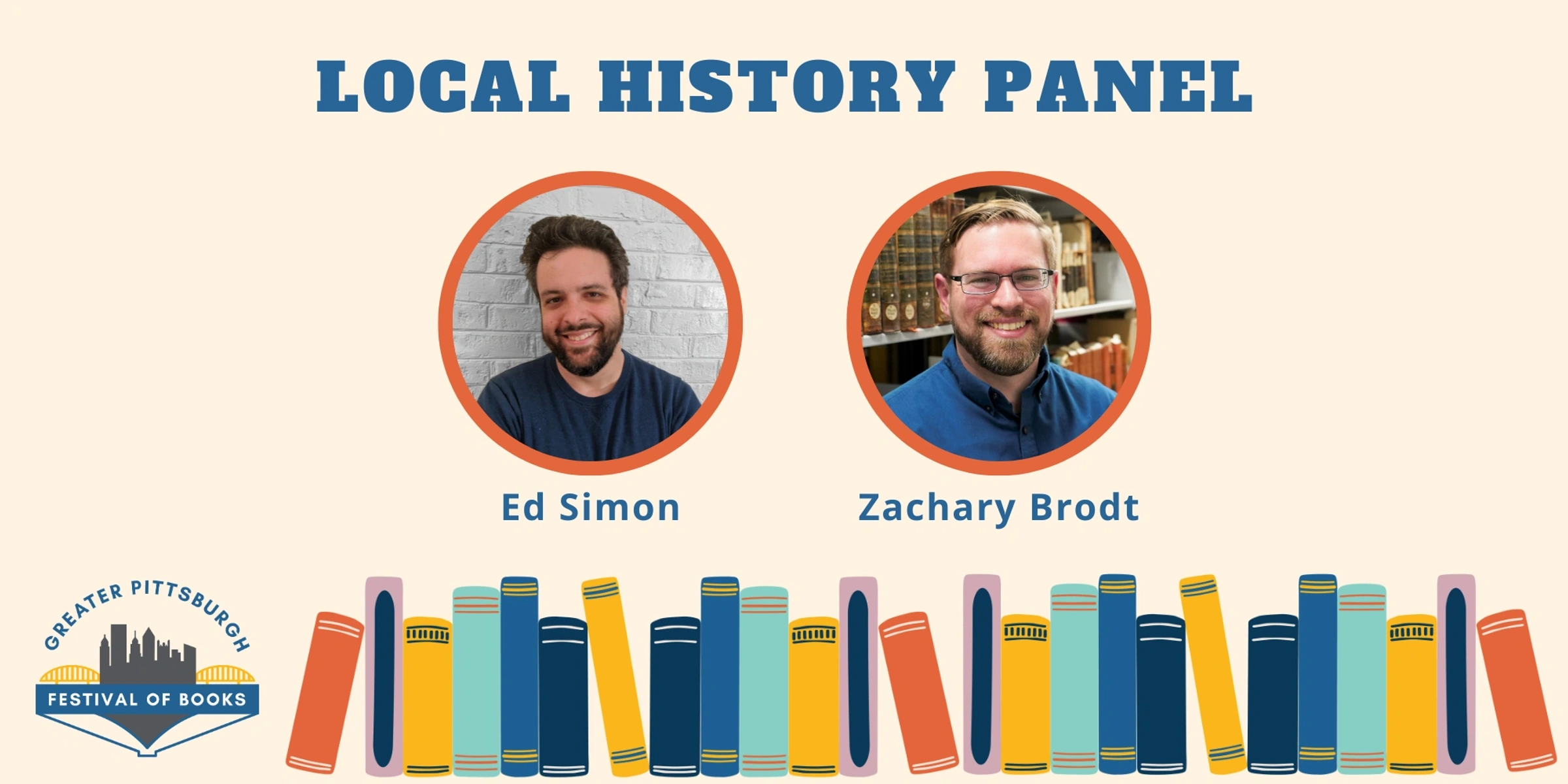
Author Site Don’t miss out: Ed Simon will be speaking at the Greater Pittsburgh Festival of Books on May 11th!
Event Info
 Why did you decide to revisit the subject of your home city after your book An Alternative History of Pittsburgh?
Because he was unjustly excluded from my first book on Pittsburgh, this second title was to finally give Mr. Rodgers his due! All joking aside, a big part of this second book is to explore that which I didn’t have the space to talk about in An Alternative History of Pittsburgh at a more granular, specific, and analytical level. With the first book, I was trying to do something very specific, which was to give this kind of fly-by-night capsule overview of Pittsburgh history organized in a way that gives a sense of how the city has intersected with larger themes in American life for three centuries. A big contention of mine in that book, drawing this from a phrase of poet Jack Gilbert, was that Pittsburgh is a “consequence of America,” that the entire American story in all of its contradictions, between labor and capital, immigration and xenophobia, environmentalism and environmental degradation, can be told in the story of Pittsburgh. In large part, The Soul of Pittsburgh was an attempt to make a brief for that argument, across thirteen essays, all of them substantially longer and more personal than those in An Alternative History of Pittsburgh.
In the first chapter of the book you recount how you told a group that you were speaking to that you didn’t want your book to be a “Yinzer Book.” What do you mean by that?
This happened at a talk that I gave at Riverstone Bookstore where I was sort of hemming and hawing about what I wanted my book to be and what I wanted it not to be, and finally a very perceptive audience member chimed in and said “You didn’t want it to be a Yinzer book.” I was born in Pittsburgh, raised in Pittsburgh, attended all twelve years of public school in Pittsburgh. Both my parents are Pennsylvanians, my mother from nearby Greensburg. I also lived a way from Pittsburgh, for twelve years, getting my pretend “coastal elite” card punched, spending time in Manhattan, Cambridge, and Capitol Hill (I should say that the Massachusetts city isn’t a Harvard reference, I didn’t go to Harvard. I did, however, catch the T near Harvard for work quite a bit). After that twelve years away I wanted to come back to Pittsburgh because I deeply love Pittsburgh. For a long time my heart was in Pittsburgh, but I in the uttermost east. So for me, as a lot of Pittsburghers, it’s really intrinsic to my identity, I’ve always been – and always will be – that “Pittsburgh Guy.” Those are my bona fides, just to get that all out of the way. Now, with the Yinzer thing. I think that there is something incredibly powerful in the persona of the Yinzer – I don’t mean this ironically. I also think that there can be ways of excluding people in that persona that’s very problematic – all of this stuff is explored in the book. And I think that there is a fun, kitschy way of embodying that persona, and to a greater or lesser extent a lot of us like that sort of thing, which is fine and good. But, I do think that sometimes we embrace a kind of uncritical nostalgia, a sort of performance, that’s more of a mask than it is mirror. So, I didn’t want to do that. And, because there are already a million black-and-gold-pierogi-mullet-Steelers sorts of books (and all of that stuff is touched on), I didn’t think that there needed to be another one.
How does The Soul of Pittsburgh differ from An Alternative History of Pittsburgh? How are they similar?
This is a very different book, though I think that for obvious reasons the voice is similar, and hopefully the disposition of both love and criticism. To begin with, this is much more personal work. In my first Pittsburgh book, the only real indications of me as a personality where in the introduction and the epilogue, but because here I’m thinking about not just the history of the city, but what it means to identify as a Pittsburgher in the modern day, I intervene a lot more into the narrative. Really, the whole question is different – if the first book provided a snapshot introduction to history, this one is more about wrestling with what it means to be from what columnist Brian O’Neil called a “formerly important place,” how we live with the weight of industrial history and all of the contradictions inculcated by it while imagining a different future. The structure is also different. With An Alternative History of Pittsburgh I was writing what one reviewer called “Flash Nonfiction,” which I think is accurate. That entire book was composed of forty short vignettes when read sequentially would give you a sense of the overall arc of Pittsburgh history, whereas The Soul of Pittsburgh has fewer chapters that are longer, which allows me to really get deeper into the individual subjects that I’m exploring.
What sort of topics do you explore in the new book and why did you focus on what you did?
Everything. Everything is in this book. But, kidding aside, I did try and include a wide variety of considered topics, thinking that a collage was the best way to approach the question of Pittsburgh identity. So you’re going to see Mr. Rogers and Andy Warhol, Flashdance and furries, Joe Magarac and Turkey Devonshires. More than a question of history in the archival sense, The Soul of Pittsburgh attempts to answer how Pittsburghers have been seen and how we’ve seen ourselves, while asking how it is that we might want to see ourselves in the future. To that end, each chapter focuses on a different aspect of Pittsburgh history and identity, including meditations on topography, labor history, class relations, race relations, literature, the environment and ecology, and even film, food, and “weirdness.”
Were there any books that influenced your approach to writing The Soul of Pittsburgh?
One of the great radical chroniclers of urban American experience is Mike Davis in City of Quartz about his native Los Angeles. I’d flatter myself quite a bit if I claimed that I came anywhere near to his accomplishment, but I hope that some of his sentiment and approach comes through in my own way of thinking about my native city. There are also several incredible works on Pittsburgh identity already written which eschew the simplistic “Yinzer Book” narrative that I wanted to avoid. O’Neil wrote a classic in the form of The Paris of Appalachia, drawn from his own experience of being a columnist and shoe-leather reporter to provide a really mature and loving portrait of what’s his adopted city. Poet Samuel Hazo, who was the founder of the International Poetry Forum and the Poet Laurette of Pennsylvania, penned an incredible impressionistic book-length essay entitled The Pittsburgh that Stays Within You. A combination of memoir and cultural criticism, I remember reading the book first when I was in high school and found it at my parents’ house, and I was amazed by how it described so much of what I knew but couldn’t put into words, while also expressing something of a past version of Pittsburgh that was very new to me.
For more about Ed Simon and his new book, The Soul of Pittsburgh: Essays on Life, Community and History, visit edsimon.org.
From the Publisher: "In this “smart, irreverent secret history” (Stewart O’Nan) Sewickley set novel by highly praised Pittsburgh native author Anna Read more
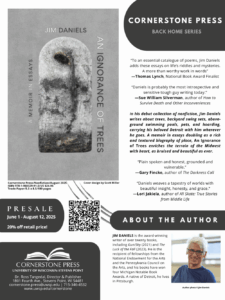
From the Publisher: "In his debut collection of nonfiction, Jim Daniels writes about trees, backyard swing sets, above-ground swimming pools, Read more

New York, NY — The Community of Literary Magazines & Presses (CLMP), the national nonprofit organization that for 58 years Read more
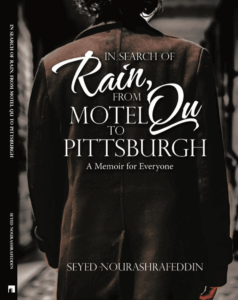
From the Publisher: "Imagine that you are a child who was born in a large family, and during your childhood, Read more

From Mt. Lebanon Magazine by way of Facebook: "On February 18, the Mt. Lebanon Public Library Board of Trustees passed Read more
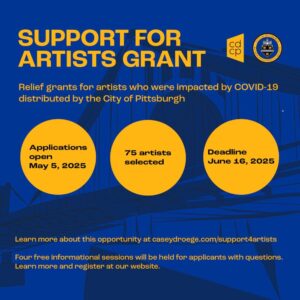
"The City of Pittsburgh, with funding through the American Rescue Plan Act (ARPA), is launching the Support for Artists Grant Read more

Littsburgh's founder Rachel Ekstrom Courage (now a New York Times and USA Today bestselling author!) recently stopped by KDKA to Read more

"The Drue Heinz Literature Prize recognizes and supports writers of short fiction and makes their work available to readers around Read more

"Applications are now open for Read Local Eat Local 2025! This is event is on Saturday, September 6, from 11 Read more
PITTSBURGH — Prime Stage Theatre celebrates its 29th season with three world premieres commissioned from three Pittsburgh playwrights: Nov. 7-16, 2025 – Mr. Read more
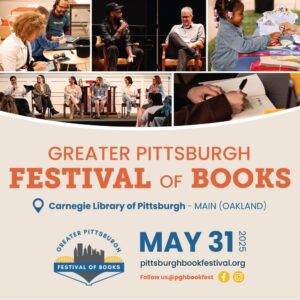
PITTSBURGH, PA – It’s time to book your spot! Registration for the 2025 Greater Pittsburgh Festival of Books is officially Read more

From the Publisher: "The Mackenzies and the Flahertys, two of the founding families of Port Kenneth, TN, have been feuding Read more

"The Northern Appalachia Review welcomes submissions of poetry, fiction, and nonfiction written about, representing, or engaging with the experience of Read more

But this too is true: stories can save us The writer Tim O’Brien calls storytelling an essential human activity. "The Read more
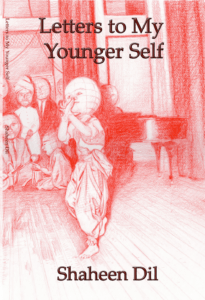
"'Where do you end and I begin?' is the question which haunts Shaheen Dil’s remarkable memoir-in-poems. Dil’s journey is at Read more
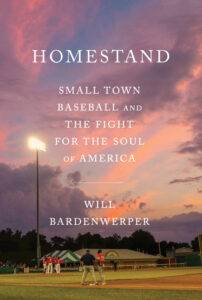
"A poignant memoir exploring small town baseball as a lens into what’s right and wrong with modern America—written by an Read more

City of Asylum Pittsburgh and International Cities of Refuge Network (ICORN) collaborate to present 30+ free,transformational events over 4 days Read more
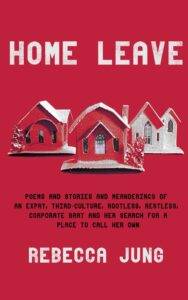
From the Publisher: "In 1958, a midwestern family was uprooted from Canton, Ohio to Bukavu in the Belgian Congo during Read more
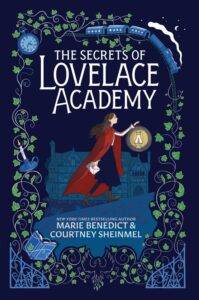
"From New York Times bestselling author Marie Benedict and Courtney Sheinmel comes a historical adventure about a young girl plucked Read more
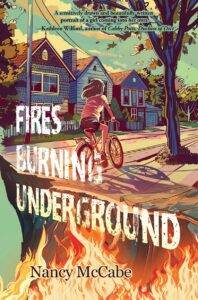
From the Publisher: "It’s Anny’ s first day of middle school and, after years of being homeschooled, her first day Read more
