

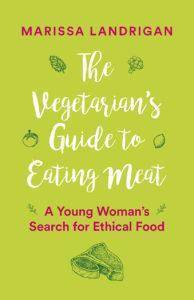
Although Pittsburgher Marissa Landrigan was once a hardcore vegetarian, today she takes a side of chicken with her broccoli casserole. But the food journalist’s switch back to meat was motivated by more than a craving for hot wings. Marissa travelled across the U.S. to uncover the story behind her dinner, a journey that would forever change her thinking about food—as well as her diet. In her book, The Vegetarian’s Guide to Eating Meat (Greystone Books, April 2017), she shares the incredible story of her ethical voyage, and the surprising revelations she discovered along the way.
Marissa is an acclaimed writer and award-winning educator whose essays have appeared in numerous publications, including The Atlantic, Salon, Guernica, and Orion. Her skill for transforming hard-hitting fact into engrossing narrative shines through in The Vegetarian’s Guide to Eating Meat, a poignant, thoughtful exploration of the modern food industry.
Don’t miss out: Landrigan’s book launch will be at White Whale Books on May 12th and she’ll be speaking at Pittsburgh Arts and Lecture’s Made Local series on August 3rd!
Cheez Whiz is Vegetarian
 I was sitting at the kitchen table with my new roommate, Erin, in Washington, D.C. She had a map of the city and a red Sharpie she was using to circle neighborhoods I should avoid. I was new to the city, a recent and hopeful college graduate, staying with some friends of a friend from high school for the duration of my summer internship with an environmental nonprofit. Erin had spent the last four years studying at George Washington University and wanted to make sure I could navigate the dense, complex city comfortably on my own. Here, she circled, was a great coffee shop on my way back from work. She marked Ben’s Chili Bowl and Kramerbooks and an independent record store where she knew I’d be able to find the kinds of obscure bands we both liked. Meridian Hill Park, just blocks from our apartment, was ne and beautiful during the day, but there had been a recent string of sexual assaults there after dark. Columbia Heights, the next neighborhood to the west, was a known drug hub. Needles in the street.
This was my introduction to the city, a place full of art and politics, of potential and promise—for the right people, in the right place, at the right time.
Shortly before My college graduation, determined not to move back in with my parents, I’d gotten an internship with the Communications Department at the Wilderness Society, practically a dream job for a young activist writer. I arrived at the office on my first day—one week and two days after my college graduation ceremony—with feet blistered from the heels I’d walked in for three blocks from the bus stop. The building, the whole block, stretched before me like an urban dream, my Mary Tyler Moore fantasy come to life. Smooth taupe bricks, an enormous window etched with the Wilderness Society’s logo in gold, a courtyard dotted with blossoming cherry trees, and a stone archway marking the entrance. Directly across the street, I could see the fountain and sunken amphitheater courtyard of the National Geographic Society. I took a deep breath, ignoring the faint sweet rot of a mid-Atlantic city in the summer, and thought, This is it. I was living confidently in the direction of my dreams. My real life could begin.
My nervousness at meeting the people I’d only spoken to over the phone was unfounded. Within the first few weeks, I’d become comfortable and familiar with my coworkers: Pete, one of the three vice-presidents for communications, a kind father to a toddler daughter, with a beard and glasses, a man who looked like he spent his weekends in wool socks and hiking boots; Drew, a funny and sensible law school grad, just a few years older than me, who would leave in the fall to join his fiancée on a yearlong Fulbright to Lima; and later, Sharon, a young Korean American in the year between American University and Georgetown Law, with whom I gossiped regularly in the office.
My first task, after getting settled in, was to write a series of press releases, based on a template, about some of the monuments in the National Landscape Conservation System, a lesser-known, less-protected series of parks run by the Bureau of Land Management. The language of advocacy was already in the press releases, the result of months of focus groups and messaging meetings. My job was to write a brief paragraph about the beauty and conservation value of each monument so that we could personalize the press release by state: the Canyons of the Ancients in Colorado, Grand Staircase-Escalante in Utah, Upper Missouri River Breaks in Montana. I spent my first few weeks as a college graduate studying photographs and fact sheets about some of the most beautiful wild places in the country and describing what I saw. This was perfect.
One night that summer, I returned home to my apartment around ten at night and realized I hadn’t eaten anything all day. Dizzy and grouchy and tired, I yanked open the door to my freezer and cupboards, tossing a series of cardboard boxes onto the counter. I ripped open the tab on a package of Near East Parmesan-flavored couscous and poured the grain into a plastic bowl. I sliced open the seasoning packet and dumped the white powder flecked with dried green herbs into the water, stirring quickly with a fork before setting the whole thing in the microwave to rotate on its glass plate. A fake chicken patty slipped from its cellophane sleeve straight into the toaster for a minute on each side. Ten minutes later, I sat cross-legged on our hand-me-down orange couch, a plastic dinner plate balanced on my lap, watching Martin Sheen play the president on TV and swirling fake meat through a small pond of ranch dressing.
This is what passed for a meal most of my first few years as a vegetarian. I was still young, capable of eating anything short of Tupperware and remaining healthy. I had no clue about budgeting for groceries. And I had spent most of my childhood hiding beneath a table, avoiding the feminine domestic, which is to say: I never really learned how to cook. Cracks began to form in my perfect activist adulthood.
The problem with being a vegetarian, I discovered, was that you couldn’t eat meat. Steak was my favorite food when I was seventeen—I couldn’t get enough of that tough, chewy meat, of the red-gray flesh peeling apart into moist strands under the pressure and slide of a knife. I’d let each bite drip bloody juice onto my mashed potatoes before I ate it, sucking the meat dry in the corner of my mouth. But being a vegetarian meant you had to eat a lot of vegetables, and I’d never really been a fan.
I gagged over the grimy paste of lentils mashed between the at plates of my teeth, the slimy flesh of an eggplant slipping towards the back of my throat, the grainy pulp of a soft pear. Broccoli tasted like plastic to me, hummus like dirt. I couldn’t so much as graze the fuzzed skin of a peach against my lower lip without convulsing in a shiver of disgust. Once, in a nice restaurant in California, I accidentally put a slice of mushroom into my mouth—masked under the thick Alfredo sauce on my manicotti, which I had ordered without mushrooms—and the gritty edges of it, the slickness against my tongue, made me so sick I had to run to the bathroom to spit it out into a trash can.
When I decided to become a vegetarian, I abandoned my family’s communal learning space. Stepping outside of my family kitchen meant I’d left behind any chance to learn what to do when faced with a diet dictated by unknown ingredients. Like most twentysomethings left to fend for themselves, I learned to cook cheap and easy. I just did it without meat. I ate basically the same diet as I had as a non-vegetarian, subtracting the meat and filling in the white space left on my plate with more of the something else. Think frozen pizzas. Think Tater Tots and cheese sandwiches. Think instant ramen. Lots and lots of instant ramen (only the mysteriously named “Oriental” flavor, without beef or chicken fat). Kraft’s blue boxes of dried macaroni and powdered cheese are vegetarian friendly and only about sixty cents apiece. After a few years, I became adventurous enough to branch into the “ethnic” food aisles at the grocery store, tossing cans of refried beans, our tortillas, salsa, and pre-shredded cheese into the cart for quesadillas. Boxed rice, boxed couscous, boxes risotto mixes.
I never really added produce.
When I discovered meat substitute products, they were a godsend. No longer did I have to pretend a meal without meat was filling. Now I had fake steak strips for fajitas, fake chicken patties to eat between hamburger buns with ranch dressing, fake chicken breasts to toss into a stir-fry, Tofurky and soy and mycoprotein molded into new shapes.
A few years later, I saw an episode of The Biggest Loser, NBC’s weight loss show, during which their personal trainer took the contestants grocery shopping with a nutritionist. The muscular trainer stood, midriff bared, alongside the trim blonde nutritionist in her blue polo as she told the group they should do most of their grocery shopping around the perimeter of the store, because that’s where the “real” food is located: the deli and butcher for meat and cheese, the bakery for fresh breads, the produce section. Avoid the middle, she told them. This is where the processed food—highest in calories, lowest in nutritional value—lives.
I did my grocery shopping at eight o’clock on Sunday nights in the neighborhood Safeway, beneath a sign alerting me to constant surveillance of this street corner as a known drug exchange. And I did all of my shopping at the center of the store, weaving a sparse cart up and down aisles of boxed food, canned food, frozen food. But at least I wasn’t eating meat.
Here’s how it should have worked: I became a vegetarian. I began trying new vegetables: asparagus and leeks and bean sprouts. I used only cloth grocery bags. I shopped entirely at the local farmers market. I learned to bake my own bread, white knuckles kneading fresh dough daily, or how to make my own cheese, weaving long rubbery braids of mozzarella. Through my food, I communed with the landscape around me, raising my own diet up from the soil, cradling little green pots of basil, chives, cilantro in the warm light of a kitchen windowsill, constructing a raised bed out back and planting rows of sweet red peppers. I walked amid my produce, fingers running lightly along tomatoes staked in the ground, their green vines reaching towards the blue sky like hope. Yellow squash and cucumber flowered along the ground, their spiky skin pricking my hands as I picked them every Saturday morning in the sun.
But that’s not how it worked. I ate frozen, microwave-ready meals, vegetarian tofu potpies topping a thousand calories per individual serving. I didn’t even think about the bleached our and sugar in my processed white bread, the chemicals in Miracle Whip, or the sodium content of fake bologna slices. Potato chips and Cheez Whiz were vegetarian, not to mention cheap. I heated and reheated chemical compounds, oblivious to the carcinogenic potential of red dye #40.
I had the best intentions, but I was a child of the suburbs, changing my diet without changing any world view. These meals were ethical by only one standard—no meat—vegetarian by technicality. In college, being a vegetarian seemed easy—I was surrounded by young upper-middle-class suburban radicals, most of them vegetarian. My boyfriend was a vegetarian. The campus dining hall had a vegan station. Here in the city, I was eating bad food because I couldn’t cook for myself, and I was alone. I was living the reality of most people in inner-city environments—fresh, healthy produce was difficult to find, and either of poor quality or too expensive to afford when I did. And the fake meat products that became my dietary crutch were chemical creations with a big environmental impact. I began to feel overwhelmed by how much work it was going to take to live and eat true to these ethical ideals. I wasn’t well prepared for what vegetarianism or postgraduate life would entail.
Excerpted from The Vegetarian’s Guide to Eating Meat by Marissa Landrigan. Published by Greystone Books, April 2017. Adapted and reproduced with permission of the publisher.
From the Publisher: "In this “smart, irreverent secret history” (Stewart O’Nan) Sewickley set novel by highly praised Pittsburgh native author Anna Read more
From the Publisher: "In his debut collection of nonfiction, Jim Daniels writes about trees, backyard swing sets, above-ground swimming pools, Read more
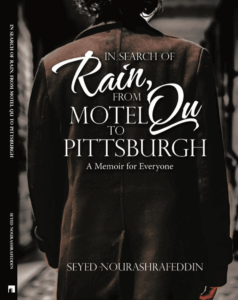
From the Publisher: "Imagine that you are a child who was born in a large family, and during your childhood, Read more
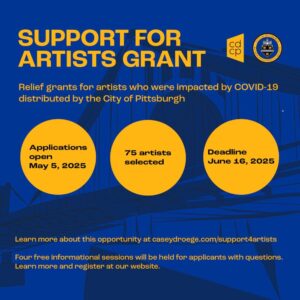
"The City of Pittsburgh, with funding through the American Rescue Plan Act (ARPA), is launching the Support for Artists Grant Read more

Littsburgh's founder Rachel Ekstrom Courage (now a New York Times and USA Today bestselling author!) recently stopped by KDKA to Read more
"Applications are now open for Read Local Eat Local 2025! This is event is on Saturday, September 6, from 11 Read more

PITTSBURGH — Prime Stage Theatre celebrates its 29th season with three world premieres commissioned from three Pittsburgh playwrights: Nov. 7-16, 2025 – Mr. Read more

PITTSBURGH, PA – It’s time to book your spot! Registration for the 2025 Greater Pittsburgh Festival of Books is officially Read more
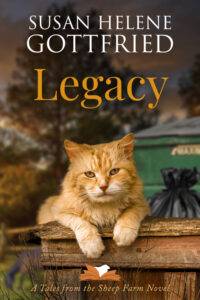
From the Publisher: "The Mackenzies and the Flahertys, two of the founding families of Port Kenneth, TN, have been feuding Read more
"The Northern Appalachia Review welcomes submissions of poetry, fiction, and nonfiction written about, representing, or engaging with the experience of Read more

But this too is true: stories can save us The writer Tim O’Brien calls storytelling an essential human activity. "The Read more

"'Where do you end and I begin?' is the question which haunts Shaheen Dil’s remarkable memoir-in-poems. Dil’s journey is at Read more
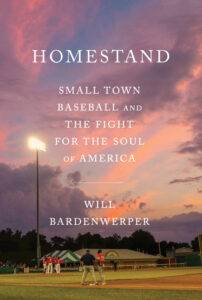
"A poignant memoir exploring small town baseball as a lens into what’s right and wrong with modern America—written by an Read more
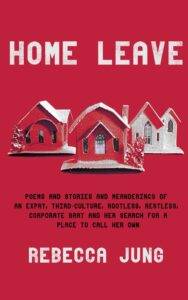
From the Publisher: "In 1958, a midwestern family was uprooted from Canton, Ohio to Bukavu in the Belgian Congo during Read more
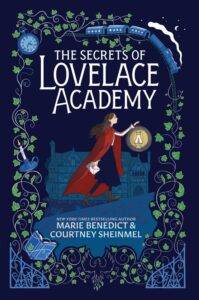
"From New York Times bestselling author Marie Benedict and Courtney Sheinmel comes a historical adventure about a young girl plucked Read more
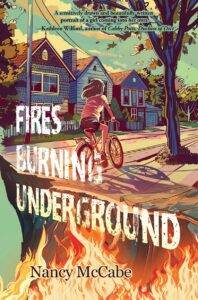
From the Publisher: "It’s Anny’ s first day of middle school and, after years of being homeschooled, her first day Read more
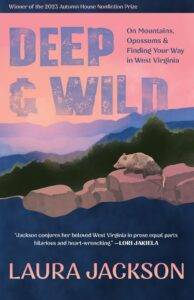
Loretto, PA. March 10, 2025 — The WCoNA Writers Conference of Northern Appalachia® is pleased to announce Deep and Wild: Read more

ALL SKATE: True Stories from Middle Life is a series of musings from one mid-life woman, wife, and mother on what Read more
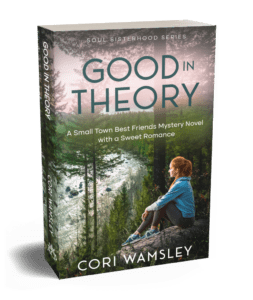
What inspired you to write Good in Theory? My inspiration for Good in Theory came from so many different places. Read more
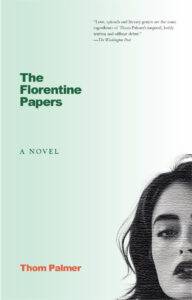
"Thom Palmer’s richly imagined first novel offers a hilarious yet bittersweet examination of food, art, and love..." From the Publisher: "When Read more
