

With Veteran’s Day around the corner, we’re thrilled to be able to share with you this excerpt of He Never Liked Cake by Janna Leyde, a Pittsburgh native who is passionate about bringing the physical and mental benefits of yoga to the brain injury, PTSD, veteran, and trauma population on both local and national levels.
Janna learned about brain trauma firsthand at a young age after her father was injured in a horrific car accident, permanently altering her family’s life. That tragedy inspired her to write this touching memoir of her experience, as well as to explore alternative, less invasive methods of therapy for brain trauma, becoming an expert in the field. She recently published an illustrated guidebook about the benefits yoga for victims of trauma called Move Feel Think: Yoga for Brain Injury, PTSD, and Other Forms of Trauma.
At 7pm on Friday, November 13th at Bend Yoga, in Honor of Veterans Day Week, Leyde will be reading from her memoir and discussing her personal experiences and the physical and mental benefits of yoga for brain injury and PTSD. Books will be available for purchase.
Circling a Star
 “What?” I asked as I slammed my bedroom door and tore off my suit. “Is he okay? An accident? What do you mean? Mom!”
My mom didn’t answer. I could hear her going from room to room, locking doors and shutting windows. I scrambled for some kind of shorts and sleeveless shirt combo.
To this day, what I was wearing is one detail I cannot remember. I can’t remember whether I wore shoes or sandals, whether I had on a tank top or some other summer shirt. I don’t know whether I pulled my hair up in a scrunchie or left it down. Hell, I don’t even remember what length my hair was. I only remember grabbing my purse—rather, the forest green nylon pouch with a long black strap and several detachable hooks that I bought in Denver that I called a purse. It was my very first. I felt like I should be an adult, with a purse, that day.
My mom wore khaki capris and a baggy T-shirt with a horse on it, wedge sandals, and her thin gold watch and thick gold wedding band. She had a beautiful, tan face. It had been scrubbed clean of makeup and was terrifyingly expressionless when I came out of my room. She rushed through her typical leaving-the-house routine—grabbing her keys from the hook in the hallway, locking the door, latching the screen door so Marble wouldn’t get stuck between the two, and checking that Meagan was in the garage with food, water, and the garage door cracked an inch from the ground to let in fresh air.
She insisted I put on my seat belt, flung the clutch in reverse, and screeched through a three-point turn. As the car lurched down the driveway, I looked up to see the sun splinter through the leaves of the cherry trees. The branches looked black against the white light.
The back wheels of the Accord spit gooey gravel behind us as we peeled down the road. The speedometer crept up to 45 mph. The speed limit on Latonka Drive was 30. My mom had not put on her seat belt. My mother did not break rules.
I was speechless as we sped through stop signs and then out the entrance of the lake, down the country road that led to the highway, and around the ramp to I-79, south to Pittsburgh. Once we were on the highway, the speedometer read 75 mph. My mother did not break rules.
“Mom,” I said. “Mom! Watch your driving! Please slow down. Please. Please tell me what’s wrong. Please slow down.”
The car zigzagged from one lane to another. We were reaching 90 mph. She was not paying attention. She had started crying at some point, and now she was gasping, sobbing, wiping her face, and shaking her head. I looked down at the window control. I flipped the switches around and listened as the power control hummed my window down and then hers. I thought fresh air would help. Fresh air always helps when one of us gets carsick. I didn’t know what would help, make her pay attention to her driving, or make her explain what was happening. I steadied the steering wheel with my left hand. I felt small, feeling the tug of the car swaying in and out of lanes, afraid it was going to fly off the shoulder and into the trees.
“Mom!” I yelled. “Please tell me what is wrong. What is happening? Please slow down. Please, at least, put your seat belt on.”
She looked at me. As her gaze shifted right, the car followed. My legs stiffened, and I grabbed at the window frame to make up for an “oh shit” bar that wasn’t actually there. She had been hitting the brakes so many times that my seat belt was choking me. She kept looking at me, ignoring the road and the cars and the fresh air billowing through our windows.
“He might be dead,” she said, and she turned to face the road ahead.
My heart stopped—I think. The pulse was unfathomable, heavy, a gigantic beat suspended in my chest. I didn’t think it could recover, but then it beat again. And then I had trouble finding air. It was plastering my face, but I couldn’t breathe it in. Then my lungs filled—eventually. Next, my brain stopped—maybe. I didn’t understand what words meant. My mom was speaking these words—the same words over and over. I couldn’t make sense of any of them, couldn’t find any meaning in four simple words. I stared at the yellow lines whirring underneath the car, first under the right wheel and then the left and then disappearing somewhere on the other side of the driver’s-side window.
“What?” I whispered, realizing I was still in a body that could talk and breathe and pump blood. “What do you mean he could be dead? What are you talking about?”
“Janna,” she said. Her voice was stern now. She had stopped gasping and swerving as we merged onto 279 South to Pittsburgh. Not even twenty minutes had passed. Driving at times over 100 mph significantly shortened the trip, normally a fifty-minute drive. The worst of it was over, the worst of her driving.
“Your father has been in a car accident, and he is in the hospital, and he may be dead. You have to prepare yourself, because he’s probably dead. Okay?”
Blurry evergreens and neon green road signs whizzed by as we rounded the mountains and the city came into view. I listened to her repeat the same words over and over again. “He’s probably dead, Janna. You need to be ready for this when we get there. I just know he’s dead. Your father could be dead.”
Her words started to sound like an ugly, unbelievable mantra. I wanted out of the car. I was terrified but too afraid to let my mother know what I was feeling. So I argued with her for the next seven minutes it took us to get to Exit 8A toward the Veterans Bridge.
“Mom, please stop. You’re wrong.”
“He might be dead, Janna. You need to be ready for this when we get there.”
“You don’t know that! How do you know that? Did they say that? Why do you keep saying that? Tell me he’s not dead. He’s going to be alive. He’ll be alive when we get there. Dad’s alive. Right? He’ll be talking, and everything will be fine.”
All I wanted was to hear my mother say was that he was alive. He could be hurt or broken but not dead. He had to be alive. I asked her more times than necessary, hoping for a new answer.
“Why can’t you tell me?” I begged her. The whole time, I was trying to not cry; so far, I was successful. “What’s really happening?”
“Now,” she said. “Listen to me, Janna.” I listened.
She told me to be prepared for the worst. She told me that she didn’t know, either. She told me that no one had told her, so she couldn’t tell me. She told me that we would know when we got there. She told me she was scared. She told me that she didn’t think he was alive. She told me she loved me. She explained the phone call. It was a woman trying to get in touch with Mrs. Leyde, John Leyde’s wife. Mr. Leyde had been in a car accident and had been life-flighted to Allegheny General Hospital. She was not aware of his condition but requested that his wife get to the hospital immediately. She was not able to release further information until Mr. Leyde’s wife was present. The woman on the phone was not able to say if he was dead or alive.
So there we were, searching for a parking spot at AGH.
I pulled and tugged at my seat belt, too tight across my neck and chest, convincing myself that no matter what my mother told me or didn’t tell me, we would get there, and he would most definitely be alive. I told myself I had to believe for both of us. I told myself that he would probably be talking, and everything would be okay.
We found a spot not fifty yards from a wide entrance with sliding glass doors. I sat in the passenger seat, clutching my only possession—my purse— that made me feel like I was on my way to becoming a responsible adult. My mother wiped her eyes and rolled up our windows. I didn’t want to leave, to go in, to find the real answers to my questions. But I followed her, a few paces behind, over to the entrance and through the sliding glass doors.
A woman at a desk directed us down a wide hallway yellowed by dingy lighting. It led us toward the Trauma Unit, where we ran into my father’s boss, who was there with his wife. Tom was a tall man who reminded me of most of my father’s friends, jovial and a little schmooze-y, with a mustache. Standing in front of us, he looked sad, scared, and exhausted. He looked like he didn’t know what to say.
His wife, Cheryl, spoke first. “He’s… well—come with us.”
Tom and Cheryl knew where to take us. This fact alone made me feel like things might not be so bad. As we rode in a tiny elevator up to the Trauma Unit, my mother asked them questions about his condition.
“He’s suffered a head injury,” Tom said. “We don’t know how severe, pretty severe. They don’t know the damage.”
My stomach flipped with each floor. I looked at my mother, thinking about how her stomach must be doing the same thing. I could see how annoyed and scared she was becoming. Neither of us likes elevators. Nothing was getting any better.
When the elevator dinged and the doors creaked open, I saw a new hallway, white walls and white linoleum floors flecked with dirt and marked up from the soles of a thousand rubber shoes. The Trauma Unit stunk like sickness and antiseptic. It reminded me of a vet’s office. We followed Tom and Cheryl into the waiting room, and my mother walked up to a desk buzzing with nurses holding clipboards. She was told to sit down and wait. She didn’t. She told me to sit down and wait. I did.
The nurses at the desk told my mom over and over again that she could not see her husband. She asked around for other nurses, who said the same thing. She tried to catch them as they came out to the patient rooms to ask where he was. These nurses told her that he was not cleaned up; therefore, she was not able to see him. That was the only thing they told her—he wasn’t clean yet.
I sat in a hard chair, wooden and upholstered in coarse blue fabric. I was surrounded by other people sitting in chairs, all of us having been told to wait by nurses, doctors, and family members. I didn’t know any of these people, who they were here to see, how long they had been told to wait. I wanted someone other than Tom to tell my mother something. She was getting angry.
I sat alone with my green purse on my lap and watched the news, watched people, and watched the clock. It was a little past 7:00. I thought about being bored, but it didn’t seem appropriate. But there was nothing to do and no one to talk to. Whatever was taking place was ruining my evening skiing plans. I wondered if anyone was going to tell Sarah and Jackie that my dad was not going to pick them up after work. I hoped they weren’t waiting. I pulled out my purple nylon wallet with “Janna” written in white bubble letters on the outside flap. I went through it and took out the plastic sleeve that held all my friends’ school pictures. I started to worry that this might affect our family vacation to North Carolina next week. I would have to tell Rebecca she couldn’t come.
Cheryl eventually came around to check on me. I felt uncomfortable— Cheryl and Tom were the only other people I knew there. I hated that this man that my father worked for was the only person trying to console my mother. She didn’t like that my father sold cars. She never did. And now she was stuck in the trauma unit on a Tuesday crying to his boss because of something terrible that happened when he was selling damn cars.
I felt like I’d been waiting for hours, but I’d been told that only one had actually passed. Finally, Gram and Pa came. I don’t know who called my grandparents, but they must have driven fast, too. My mother still had not seen my father, even though she had been pleading with the three or four nurses who were taking care of him. When she came out to talk to Gram, I couldn’t hear them, but I could see through all her composure that she had not stopped crying.
Pa came over and sat with me while Gram and my mother tried to gain more control over things. Pa, the man my father is the spitting image of, the man who is unable to find the bad in even the worst of things, did his best to keep me entertained. He brought over a blank notepad and two pencils. We sat in the waiting room and took turns drawing objects we could see—a lamp, the TV mounted on the wall, a stack of magazines with a Kleenex box on top. Pa and I did this in church. Drawing was a good cure for boredom. I didn’t ask him any questions, because I knew he didn’t know what was going on, either.
There was a small room next to the waiting room. When my mother was not arguing with the hospital staff, she sat in the small room with a cream- colored phone and a Kleenex box one of the nurses had brought her. It was the same one I had drawn. The glass door stayed closed, but I could watch her inside. She sat upright in the chair, digging for things in her purse and making phone calls. She made three that night.
The first call was to Fred, our close family friend. He was a psychologist who my mother worked for part-time. She had an appointment with a little girl scheduled for the next day, and Fred would need to cancel it for her.
The second call was to Brenda McBride. She was a woman I didn’t know, one of my mom’s friends, an attorney. The accident had happened on the job, and so far, my mother had not signed a single piece of paperwork. She had refused to every time she was asked or advised by someone in hospital administration. She needed Brenda to verify that she was handling things right. (She was.) She needed Brenda to get her another attorney immediately. (She did.)
The third call was to Pat. She asked Pat to call everyone else.
Not long after I watched my mother make the phone calls, the waiting room went silent. A Pittsburgh police officer walked in, grabbed my mother by the arm, and without saying a word, walked her straight into the trauma unit. He was young and handsome, and the nurses were not able to protest. He and his uniform had everyone’s attention.
I hadn’t seen Danny in a long time and never expected him to show up, but as soon as he walked into the room, I felt better. I was always happy to see him, and he looked sharp in his uniform. I hoped he would come out and tell me what he saw behind the doors. I wanted to go home, but not until I knew my dad was okay. I wondered how he had heard what happened.
His mother had called him. Pat and her husband, Bill, had three kids. Before I was around and everyone was younger, they were like my parents’ kids, playing with our dog, borrowing my dad’s go-cart, and eating sandwiches in our kitchen. Now Leah Ann taught biology, and Danny and Keith were cops like their dad.
Danny came out and sat next to me. He put his arm around me and asked how I was doing. Okay. Had I eaten anything? No. Did I want to? No. Was I sure I was okay? Yes.
I felt important. People were watching me talk to a Pittsburgh police officer. I liked the idea that people might have been intimidated by him. I bet others were curious, because the very handsome cop-on-duty came in just for me, just for my family, just to help my mother break a rule to see my father.
“Is he okay? Is he—”
“I don’t know, kid, but he’s not dead.”
Danny couldn’t stay long—he had to get back to work.
In a room to the left, behind swinging doors, my dad lay in a hospital bed, conked out in a mess of IVs, swollen, drugged, and black and blue. The blood was cleaned off, and he was dressed in a freshly starched hospital gown. His face was broken, his left eye socket cracked in half, and his nose crushed. I was told that he didn’t look like himself. I was told I couldn’t see him and that I wouldn’t want to.
That night was my first lesson in brain injuries. My dad had a “subarachnoid hemorrhage and maxillary sinus fracture” with “multiple punctate left frontal and occipital region diffuse injury.” Pa tried to explain to me what that meant and what they needed to do to make my dad better.
Earlier that day, the doctors had to drill a hole in my dad’s head. They used an actual drill, spinning clean, right through the cranium. It seemed frighteningly similar to the drill in our garage that cut clean holes into two- by-fours under my dad’s careful guise. It was—drill bits and all. Then they attached a drain to the hole to suck liquid from his brain.
The injury had caused diffuse bleeding, and if the doctors didn’t relieve the pressure, his brain would swell, and he would die. I wanted to know more about diffuse bleeding and what it meant so that I could use it if anyone asked. Other people in the waiting room had asked me why I was there.
My dad was sedated and had a hole in his head with a drain for the diffuse bleeding.
I learned about ventilators, too. Watching hospital soaps with my grandmothers and hearing my aunts’ tales of working in the ER, I had some understanding that people who could not breathe needed to use ventilators. My father had been sedated on the scene and since then had lapsed into a medicated coma. He was on a ventilator.
“His head is very, very swollen, Janna,” my mother said. She had come out to tell me what I needed to do that night. “Very swollen on the left side. He is also very black and blue. He has a lot of bruises on his head and face. There is a drain in his head and lots of tubes.”
“Oh,” I said.
“It will be hard to see him,” she said. “He doesn’t look like your father right now.”
“Do you think he’ll open his eyes soon and talk to us?” “I really don’t know, Janna.”
“Oh.”
“Do you want to see him?”
“Not really.”
“I think maybe you should. Just come in and say hi to him. Tell him you love him.”
“I really don’t want to—”
“Come with me.”
I took my purse with me and we walked in through the swinging doors of the trauma unit. The vet’s office smell was stronger, and the lights were brighter. I felt like I was somewhere I was not allowed to be. Nurses scurried around on autopilot, and the hallway hummed with activity. When we walked into my father’s room, I expected to see doctors bustling over him. But there was just one nurse, Jan, standing by his bed, and only the beeping machines broke the silence.
The drain was there. I couldn’t see the hole in his head, because his head was wrapped in white gauze, but I could see the drain winding down from behind his head like a misplaced tail. The drain tube was clear. Had it sucked everything out?
He was appalling to look at. I found myself looking away from his face, at my K-Swiss, at his hospital ID bracelet, or at the railing on the bed. Someone had blown up his head like a balloon from a helium tank. The skin around his forehead, cheeks, and neck stretched tight in pinks and purples. I thought about the times he’d sneak away with Danny and Keith at parties to suck helium from the tank and they’d come back talking in funny voices. He’d only recently let me try it with them.
The room smelled terrible— stale and medicinal. He didn’t move. His hands and forearms were threaded with IVs. I didn’t want to touch him or talk to him. His eyes were closed. His left eye looked like it would never open because someone had shoved a baseball under his eye socket, and now his eyelid was a bulbous red slit with no eyelashes.
The nurse had left, and it was just my mother and me, alone with him.
“Tell him you’re here,” my mother said from the other side of the bed. “Just tell him.”
“Hi—”
The cluster of machines surrounding his bed chirped. I wanted to throw up. I wanted to run out of the room and never come back.
“Hi, Dad,” I said, leaning closer to his puffed-up face. “I love you, and …”
His thick, full mustache was the only thing I could recognize on him. He smelled like an old person.
“You’re going to get better,” I said. “You’re not a wuss.”
I looked at my mom, who was looking at him. I walked out to find Gram and Pa, leaving my mother with my father, who was motionless and mangled.
The nurses had been right. This was a look not suitable for even the strongest of loved ones to witness. It wasn’t even permitted for children under sixteen, but someone had fought for me to see him.
My mother hated the nurses and doctors. Hate wasn’t a strong enough word for what she felt. She felt lost and ignored. She thought their communication skills were deplorable. She felt like they didn’t care whether he lived, died, or continued breathing. She thought her arguments should have yielded an explanation from them. She felt exhausted from hoping that her husband’s condition might change or that she would have some time to prepare for what was coming.
The swelling in his face could go down, and his bruises could yellow and heal, but the doctors were vague about whether he might ever move, blink, or smile again. Chances were slim that he would regain those functions. He had hit his head hard. No one knew how hard.
When my mom could no longer fight for answers and was no longer allowed to see him, she wanted his possessions, familiar objects from a time before that night. Somewhere he had clothes and a wallet. He had wire-rimmed glasses and maybe Jimmy Buffett tickets, the tickets he was planning to buy that day. She wanted to make sure she could get the tickets and give them to someone else. They were expensive. The concert was in two days, and they wouldn’t be going this year. He had the keys to a blue Civic sitting alone on a lot at New Honda and Nissan City and his house keys. She figured she could talk to the right person, and all those things would be found shoved in a bag somewhere. No one could help her find his belongings, so she pleaded with the nurses to see him again.
While my mother stayed on the other side of the trauma unit doors and Gram went into the room with the phone to call her two daughters and tell them they needed to drive over the next morning to see their brother, Pa stayed with me.
We had already drawn every object in the room, so we tried to chat with the nurses on duty. He kept it light and comedic and got them to smile every now and again with punny jokes and tricks with inanimate objects. I watched them soften ever so slightly. Did they really have to walk around with a scowl? I was a kid. I had a father we all cared about. Wasn’t this their job? My aunts were nurses, and they were happy, smiley, and helpful women. I, like my mother, found the nurses deplorable.
“They’re just tired, Toots,” Pa said. “It’s late. Let’s go get a snack. How about we find a Snickers bar?”
We raided the vending machine, even though no one but me wanted to eat. It was now well after 10:00. Pat and Bill had shown up. I told them about Danny and about how he helped my mother. Pat told me that my mother wanted me to go home with Gram and Pa and sold it to me as an impromptu sleepover. It didn’t matter. I slept over all the time. I was more concerned with where my mother was going to sleep or when my father would wake up. I was too tired to voice my opinion, so when it was time to leave I left.
No one asked me if I wanted to say good-bye to my dad. I didn’t.
On the way home, I sat in the backseat with my head craned around so I could see the stars through the rear window. It made me carsick, but I wanted to look at the stars. I thought about when my dad would explain the universe to me as we stood with the dog on the grassy hill behind our house, staring at the night sky. I spent the entire ride asking my grandparents questions, leaving no room for them to have their own conversation.
I asked about brains and comas. I asked about nerves and pain. I asked about swelling, car accidents, and driving in the rain. I asked about praying and God. I asked if we were good people. I asked if Dad was a good person, if Mom was. I asked what they thought would happen tomorrow and if they were scared or sad. I asked if I would be able to talk to my dad tomorrow. I pressed my finger pads against the defrost strips and searched for the North Star. I asked about wishes and stars. I asked if they thought he was going to die.
I knew he wasn’t going to die, but I wished on a star anyway.
We pulled up to Gram and Pa’s ranch-style house, which sat at the intersection of a busy main street with a traffic light and a quiet neighborhood road. It was dark, and I couldn’t see the familiar yellow siding. We pulled into the garage, and I squeezed out of the narrow car door opening, blocked by a wall lined with protruding garden tools, and raced to the door. There were no happy animals to greet us. The house was dark and quiet inside.
That night, I had to sleep in Gram’s pajamas. I loved an excuse to sleep in one of her long cotton nightgowns covered in a loud floral pattern. Gram and I washed our faces and brushed our teeth while Pa got a glass of milk for himself in the kitchen. I situated myself where I always slept, in the twin bed closest to the wall and the window, in the room where my aunts grew up. It was the one that was Aunt Jeannie’s, the aunt that everyone agrees I most resemble. I didn’t see it.
Pa came in with his milk, and the three of us talked for a long while. I sat crossed-legged on my bed with a glass of water, and my grandparents sat across from me on the other twin. First we talked about getting my clothes at my house for the next day at the hospital; making sure I fed the dog, the cat, and my dad’s fish; and giving keys to our neighbors. Then we exhausted all the what-ifs. We prayed out loud together, counted our blessings, and thanked God and asked him to keep us safe.
I couldn’t sleep that night. I sat up at the edge of my bed and looked out the open window. The summer night air was crisp. I stared at the sky and thought again about all the times I’d discussed the universe with my dad. What was really out there? I laid down in a corpse pose under the sheets. They were soft and smelled like the cabinet where Gram kept all the fluffy towels and excessive towers of toilet paper. I prayed again, and it felt silly. I stuck my leg out and traced the lines of stenciled flowers on the wallpaper with my big toe, straining to hear the conversation my grandparents were having down the hall. I wasn’t sure what going to sleep would mean for tomorrow.
When I was little, my parents developed a tactic to trick me into going to sleep.
“What are we keeping forward to?” I would ask as a four-year-old.
I lived in constant forward motion with an incessant desire to know what we were going to do next. I refused to take naps for fear of missing something and detested going to bed earlier than other people. My parents told me the faster I got to sleep, the faster I would wake up and get to do whatever extraordinarily fun thing was planned for the next day. It worked. I had a lot of fun things going on.
That Tuesday night turned to Wednesday morning in July, and I was afraid to go to sleep. What the hell was coming next? What were we looking forward to?
Reprinted here courtesy of the author.
From the Publisher: "In this “smart, irreverent secret history” (Stewart O’Nan) Sewickley set novel by highly praised Pittsburgh native author Anna Read more
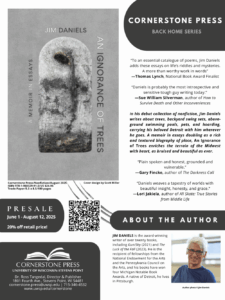
From the Publisher: "In his debut collection of nonfiction, Jim Daniels writes about trees, backyard swing sets, above-ground swimming pools, Read more
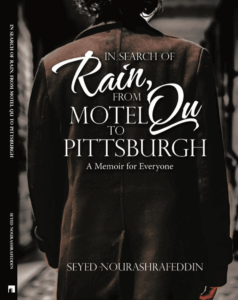
From the Publisher: "Imagine that you are a child who was born in a large family, and during your childhood, Read more

"The City of Pittsburgh, with funding through the American Rescue Plan Act (ARPA), is launching the Support for Artists Grant Read more
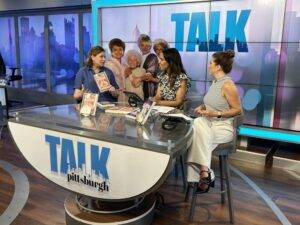
Littsburgh's founder Rachel Ekstrom Courage (now a New York Times and USA Today bestselling author!) recently stopped by KDKA to Read more

"Applications are now open for Read Local Eat Local 2025! This is event is on Saturday, September 6, from 11 Read more

PITTSBURGH — Prime Stage Theatre celebrates its 29th season with three world premieres commissioned from three Pittsburgh playwrights: Nov. 7-16, 2025 – Mr. Read more

PITTSBURGH, PA – It’s time to book your spot! Registration for the 2025 Greater Pittsburgh Festival of Books is officially Read more

From the Publisher: "The Mackenzies and the Flahertys, two of the founding families of Port Kenneth, TN, have been feuding Read more

"The Northern Appalachia Review welcomes submissions of poetry, fiction, and nonfiction written about, representing, or engaging with the experience of Read more

But this too is true: stories can save us The writer Tim O’Brien calls storytelling an essential human activity. "The Read more

"'Where do you end and I begin?' is the question which haunts Shaheen Dil’s remarkable memoir-in-poems. Dil’s journey is at Read more
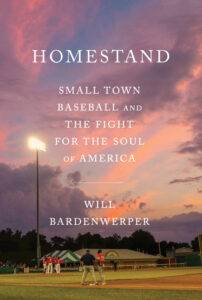
"A poignant memoir exploring small town baseball as a lens into what’s right and wrong with modern America—written by an Read more
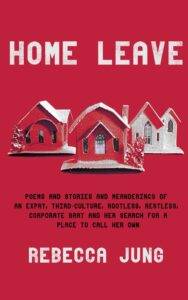
From the Publisher: "In 1958, a midwestern family was uprooted from Canton, Ohio to Bukavu in the Belgian Congo during Read more

"From New York Times bestselling author Marie Benedict and Courtney Sheinmel comes a historical adventure about a young girl plucked Read more
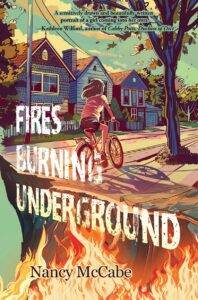
From the Publisher: "It’s Anny’ s first day of middle school and, after years of being homeschooled, her first day Read more
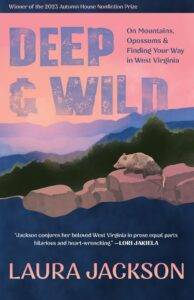
Loretto, PA. March 10, 2025 — The WCoNA Writers Conference of Northern Appalachia® is pleased to announce Deep and Wild: Read more

ALL SKATE: True Stories from Middle Life is a series of musings from one mid-life woman, wife, and mother on what Read more

What inspired you to write Good in Theory? My inspiration for Good in Theory came from so many different places. Read more
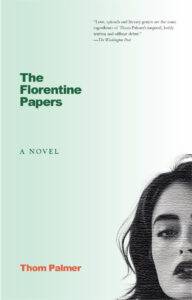
"Thom Palmer’s richly imagined first novel offers a hilarious yet bittersweet examination of food, art, and love..." From the Publisher: "When Read more
