


Eliot Pattison is the author of The Skull Mantra, winner of an Edgar Award and finalist for the Gold Dagger, Water Touching Stone, Bone Mountain, Beautiful Ghosts, Prayer of the Dragon, Bone Rattler, The Lord of Death, Eye of the Raven and Original Death. Pattison resides in rural Pennsylvania with his wife, three children, two horses, and two dogs on a colonial-era farm.
Don’t miss out: Pattison will be visiting Mystery Lovers on May 19!
From the Publisher: “Acclaimed author Eliot Pattison continues his Bone Rattler series as Duncan McCallum is drawn into dark intrigue surrounding the Sons of Liberty in this gripping thriller set in the early days of the American revolution.
Pattison’s deep historical knowledge and attention to detail brings a young America to life, immersing the reader in the atmosphere and events that were to lead to the American rebellion. Protagonist Duncan McCallum is lead into a mystery of murder, treachery, and intrigue with Samuel Adams, John Hancock, and a secret society of American patriots organizing to resist the British throne.”
“This fifth entry in Pattison’s Bone Rattler series advances McCallum’s personal life as it exhibits the seamless blend of fiction and history that distinguishes this fine series. A timely reminder, as well, of what liberty meant to our forebears.” —Booklist
Preface
 The American Revolution is taught to us in terms of well-chronicled battles and committees of Founding Fathers that were launched in April 1775 with what Emerson famously called “the shot heard ’round the world.” Such lessons, however, teach us only about the final stage of the amazing story of the founding of the United States. They neglect the remarkable events and even more remarkable people who shaped the Revolution during the years before muskets echoed on Lexington Green.
Savage Liberty opens in 1768, when many of the inhabitants of the American colonies were struggling with what today we would call an identity crisis. They weren’t thinking of themselves as Americans, they were just questioning what it meant to be British when their Parliament refused to treat them as full citizens. They were not seeking revolution, they simply wanted — and expected to be given — the same voice with their government that their counterparts in the British Isles enjoyed. During these years London had multiple opportunities to right these inequities, but at every step it chose instead to impose additional economic servitude. The British government was blind to a vital truth about its most important colonies: for six generations it had been creating a vast and potent pool of disenchanted colonists by pushing across the Atlantic those who complained about religious repression at home, those who had offended an overreaching criminal justice system, and those who sought to carve out an existence unharnessed by the rigid social and economic culture of Britain.
By 1768 the ranks of these colonists had swollen to nearly two million, many of whom were emboldened by their new lives and new land. British citizenship was becoming less and less meaningful to their daily lives. As their complaints were repeatedly met with new economic repression, they became more inclined to voice their opposition than to open their purses to arrogant bureaucrats across the sea.
The Massachusetts colony, where Duncan McCallum finds himself in the novel’s opening, has felt more than its share of London’s punishment, but the residents of Boston are still not speaking openly of rebellion. Their angry words are aimed at legislators and customs commissioners, not the king, who still embodies their national identity. They are discovering the power of standing together in dissent, not just on the cobblestone streets of their hometown, but across colonial borders. They are slowly awakening to a new common identity that bridges long-standing cultural and political differences among the colonies. This awakening was not decreed from above, nor could it be. It grew out of the personal struggles and experiences of individual men and women, not out of a common heritage, but out of common values. Before they glimpsed revolution, these colonists first had to discover that they were American.
Duncan, having painfully experienced London’s brutality during the Stamp Tax crisis, wants nothing more than to return to his peaceful oasis on the western frontier. But he is in Boston, the hotbed of dissent, and his friends John Hancock and Samuel Adams have other plans for him. Before he can discover that he is on the path to revolution, he must endure wrenching lessons about the nature of treason, honor, and freedom.
Chapter 1
Spring 1768
Boston
If ye would feel the pulse of humankind, Duncan McCallum’s Scottish grandfather once declared, just look to a busy harbor. From his perch in the church tower overlooking the forest of masts in Boston harbor, Duncan indeed felt as if he were glimpsing the pulsing heart of the colony. In quick succession he pointed to three of the nearest vessels.
“Brig from Jamaica with a cargo of rum,” the square-shouldered youth beside him eagerly answered, “next a fast bark just arrived from Liverpool with cordage and Dutch porcelain. And that filthy one with the wide beam, she’s a banker fresh from the cod beds off the Newfoundland.” Henry Knox was slow of body, but his mind was more agile than that of any eighteen-year-old Duncan had ever known, and he enthusiastically embraced Duncan’s lessons about the architecture of visiting ships and the unique nature of each of the ports they called home. “Curaçao, Lisbon, Portsmouth, Recife, and Santo Domingo,” Knox continued, pointing to ships farther out in the harbor before turning back to Duncan. “And I’ve heard that new cutter just arrived from Halifax carries a dozen twelve pounders and a brass chase gun!”
Duncan smiled. The youth was obsessed with all things military, and on the nights when they climbed the higher steeple of the Old North Church to watch the stars, he often begged Duncan to describe his experiences in the last war with the French. Duncan glanced back at the small device Knox had strapped on the back rail of the narrow walkway that surrounded the tower of King’s Chapel. “I need my lens,” he reminded the youth as Knox stepped toward the contraption.
“Pray, just a few more moments!” the teenage scholar exclaimed, motioning to a pinpoint of light, sharply focused by the lens mounted above the rail, as it traversed the tin tray below the lens. As Duncan watched, the glowing dot of light reached a small mound of gunpowder, which abruptly crackled, then exploded with a small cough of smoke. “The zenith!” the youth declared triumphantly, pointing to the sun overhead, then toward the fortress on Castle Island. An instant later the noon gun from the fort echoed across the harbor.
Duncan extended an impatient hand, and Knox slipped the lens out of its harness and hurried back around the tower. “Prithee, Duncan, may I?” he asked, nodding to the telescope in Duncan’s hands. Duncan hesitantly surrendered the instrument. Knox quickly reinserted the lens into the telescope and screwed the end cap back in place, then shook his long brown hair from his face to better examine the leather-bound tube in his hands, pausing over the inscription on the brass plate that adorned it.
“‘With gratitude for services nobly performed, your servant, John Hancock,’” Knox read, and looked up, wide-eyed. “They say Mr. Hancock will soon be the richest merchant in all of New England!” the youth declared, then furrowed his brow as he read the inscription again and looked up with a mischievous grin. “It’s like what a general would present to his favorite spy,” he suggested. “Did you purloin a letter from the king’s boudoir?”
Duncan cocked his head a moment, wondering if Knox had indeed pierced one of the many secrets he kept with Hancock. “Nothing so romantic, Henry,” he explained. “The master of his trading sloop bound for Bermuda had a seizure the day before sailing. I was able to fill in.” Something icy touched his heart as he spoke, and he turned toward the harbor to avoid further questions. The price he had paid for making the seven-week voyage out of American waters had been almost too painful to bear.
He raised the telescope to his eye and aimed it toward the northeast. “You said that burning ship went down past Shirley Point?” he asked the youth. Duncan had been on a wharf with his old friend Conawago, studying the luminescent jellyfish arriving on the spring tide, when a peal of thunder had rolled out of the clear starlit sky, followed by a flicker of flames. Fire was the nightmare of every mariner. Duncan had watched with dread in his heart as he saw the furled sails on two square-rigged masts ignite into flame. No ship could have survived such an intense explosion and the subsequent inferno, and the frigid, ripping currents off the Point would have dealt cruelly with any survivors.
“Have they named her yet?” Duncan asked. When Knox wasn’t present at the bookstore where he had met Duncan, he was usually exercising his insatiable curiosity at the docks.
“No one is certain, but the harbormaster said a fishing boat that docked last night had exchanged greetings with the Arcturus, out of London, and told him to expect her soon.”
Duncan fixed the Point in his eyepiece and slowly swept the telescope over the surrounding waters. The recently arrived revenue cutter, reviled by the many Massachusetts watermen who considered smuggling a God-given right, was anchored less than half a mile off the Point. Near the cutter, two of the small launches used by the harbor patrol were sailing in a search pattern, but nothing else. He would have expected a flotilla of boats from the neighboring fishing villages competing for salvage in the debris of the wrecked ship.
“Arcturus,” Duncan repeated. “Not His Majesty’s Ship Arcturus, not a naval vessel. Why would the military keep salvagers from a merchant wreck?”
“A trading ship, owned by Mr. Livingston of New York, they say,” Knox replied in a distant voice. Duncan turned to see him facing away from the harbor, toward the broad swath of green that was Boston Common. “The Sons are stirring the coals again,” the youth observed, “in broad daylight this time.” He spoke of the Sons of Liberty, who made sure that the customs commissioners dispatched by the king felt the colony’s fury over the steep duties they were collecting. Duncan followed Knox’s outstretched hand toward one of the streets that opened onto the rolling, grassy field. An untethered mule, grazing on the community pasture, kicked up its heels and trotted away. A flock of pigeons burst into flight and disappeared over Beacon Hill. As he watched, a small crowd emerged from the street, hoisting a long timber wrapped with ribbons, probably a wagon tongue, as a makeshift liberty pole.
Duncan grinned. No doubt several of those in the crowd were acquaintances from his months in Boston. He had grown to think of the town as an aged dowager who by force of habit and history knew that she owed loyalty to her king but who choked at the corset forced on her by his ministers. Sometimes the conflict in her emotions was so great she had to slip out the kitchen door and shout oaths to the sky. The liberty pole demonstrations were how the town vented its frustrations, and thus far the governor had wisely chosen not to interfere with them. The protests had become almost weekly occurrences since the arrival of the commissioners from London, though, until now, they had always been at night, torchlit processions that most often ended in good-natured revelry at a South Boston tavern. As another group entered from a second street, Duncan swung the telescope up and studied the compact brick house on a corner adjacent to the Common, where a slim red-haired woman emerged onto its steps, gazing at the converging crowds.
“The harbor watch!” Knox abruptly cried, pointing to a file of men in scarlet uniforms marching double time on the street below them. “The governor’s called in the patrols from the waterfront! He’s never done that before.”
Duncan swung the telescope back toward the Common to study the second crowd, then shuddered as he saw the cart they led toward a solitary oak near the top of the hill. The troops were headed up Beacon Street, which would position them just above the tall oak. “The fools!” he groaned, then shoved the telescope into his pocket. “Go back to the bookstore, Henry, and stay there,” he instructed Knox, then darted down the narrow stairs.
The crowds were merging, rapidly turning into a raucous mob as he reached the granite steps of the brick house. “Inside!” he said as he grabbed the woman’s arm.
Sarah Ramsey resisted his push toward the door. “I, for one, am happy they are taking their protest into the daylight,” she said as she pulled away from Duncan. “Look, it’s the kind Mr. Sullivan the butcher,” she said as if to reassure him, “and old Mr. Hansen the candlemaker—he’s half blind, poor soul. I should go help him.”
“Not today, Sarah.” She may have been a visitor to Boston long enough to befriend a few tradesmen, but Sarah was a creature of the New York frontier, and though she was the esteemed proprietress of distant Edentown, she had no sense of the brittle tension between Boston’s Sons of Liberty and the officials sent from London. He put an insistent arm around her waist and urgently spoke in the language of her youth, the tongue of the Iroquois, pointing to the oak tree, where several men waited, one of them mounted. Duncan turned her toward the horse-drawn cart, where a terrified man sat on a bed of straw watched over by two brutish-looking men armed with barrel staves. Finally, he showed her the file of infantry lining up along the crest of the hill.
Sarah pushed back a lock of auburn hair to see better. “The tree?” she asked. Duncan handed her his telescope. “The low limb on the south side,” he instructed.
She focused for a moment, then jerked back as if physically struck. “A hangman’s noose? Surely they wouldn’t—they can’t!” This time she did not resist as Duncan pushed her back inside the house.
“Surely the king’s soldiers will shoot if they do,” Duncan warned. “It must be one of the customs collectors.”
A sturdy middle-aged woman who had been reading in a window seat rose and guided Sarah to a table where a steaming pot of tea waited beside porcelain cups. The woman nodded to Duncan, and he dipped his head toward her. “Mrs. Pope, my gratitude once more,” he said to their landlady, then spun about and darted out the door.
He paused halfway up the hill to catch his breath. The soldiers were deployed in a battle line. There were no more than a score, but each man carried a Brown Bess musket, and Duncan had seen in the French war how their heavy balls could rip apart a man’s flesh at such a close range. The Sons seemed to think the soldiers were always bluffing, but an end to the bluffing seemed inevitable.
His heart lurched as he saw two men at the front of the crowd dragging the limp body of the customs collector toward the hanging tree, encouraged by loud cheers. The man on the horse, to which the other end of the rope was attached, waited eagerly for the order to spur his mount and jerk the rope upward, the moment of terrible strangulating death. He glanced back at the soldiers. The fuse of the governor’s temper had been slowly burning as the assemblies of the Sons of Liberty grew more frequent and more vocal. With sudden dread, Duncan realized that the soldiers might allow the hanging to proceed just so they could at last inflict the governor’s punishment. He sprinted toward the noose, weaving through the crowd, and was only fifty feet away when a foot shot out and tripped him.
As he pulled himself up, brushing dirt from his hands, the noose was fastened around the tax collector’s neck. “No!” he shouted. “You don’t understand. The soldiers!” As if his cry were the cue he had been waiting for, the rider prodded his horse forward. The noose jerked upward. The tax collector swung in the rising wind.
Duncan burst forward, plowing through the line of jubilant onlookers, unsheathing the knife he carried in the small of his back. If he could sever the rope tied to the saddle, there was still a chance to save the man and avoid the massacre to come.
He was tripped again, and this time a boot pinned his arm long enough for someone to pry away his knife. “That’ll do, Captain,” someone said. He rose in a cold rage, ready to fight his way to the horse to save the man. He could not understand the laughter all around him. The soldiers would fire at any moment. Then someone sobbed, and he saw the cart only feet away, where the battered customs collector still sat, weeping. Duncan looked up at the swaying body and for the first time saw the straw extending from its ears and its burlap face with painted eyes and mouth. The collector had been hanged in effigy.
Duncan recognized the voice of his assailant and turned. Enoch Munro, the sturdy, aging Scot who had sailed as first mate with Duncan to Bermuda, nudged him and handed him his knife, then stepped back to yield to another man. Duncan had not seen his friend Conawago since the night before. The gentle old Nipmuc Indian was haggard, his face drawn with worry, his hands stained with fresh blood. He offered no greeting and spoke in Mohawk. “It is not the pretend death we need you for,” the old man grimly declared.
Copyright © 2018 Eliot Pattison. This excerpt is published here courtesy of the author and Counterpoint Press, and should not be reprinted without permission.
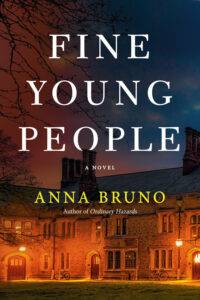
From the Publisher: "In this “smart, irreverent secret history” (Stewart O’Nan) Sewickley set novel by highly praised Pittsburgh native author Anna Read more
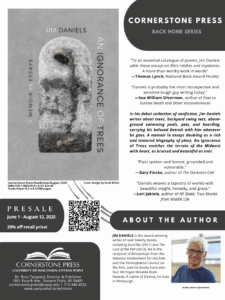
From the Publisher: "In his debut collection of nonfiction, Jim Daniels writes about trees, backyard swing sets, above-ground swimming pools, Read more
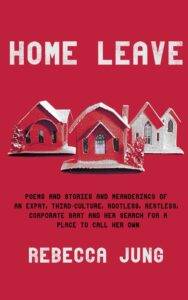
From the Publisher: "In 1958, a midwestern family was uprooted from Canton, Ohio to Bukavu in the Belgian Congo during Read more

From the Publisher: "It’s Anny’ s first day of middle school and, after years of being homeschooled, her first day Read more

ALL SKATE: True Stories from Middle Life is a series of musings from one mid-life woman, wife, and mother on what Read more
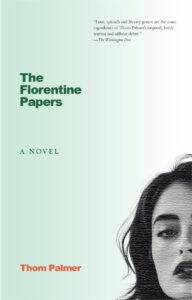
"Thom Palmer’s richly imagined first novel offers a hilarious yet bittersweet examination of food, art, and love..." From the Publisher: "When Read more
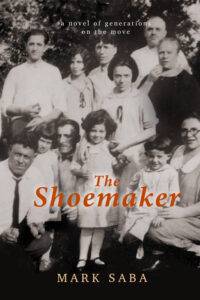
"A beautiful, poetic, ethereal read, The Shoemaker is the story of a great-grandfather and great-grandson connected by blood and by Read more
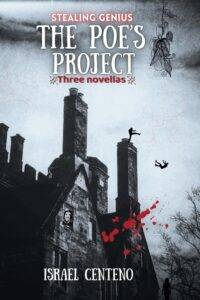
About the Author: Israel Centeno was born in 1958 in Caracas, Venezuela, and currently lives in Pittsburgh, he is a Read more

“I loved this book! Couldn’t put it down and neither will young readers. Girl power at its finest.” —Sharon G. Read more

"To those of us who have always suspected that our cats understand our words more than they let on, The Read more
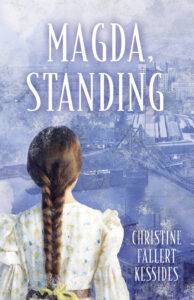
From the Publisher: "When her father pulls her out of high school to care for her invalid mother and little Read more

“Ask the Wide World is not just a story but a journey of independent thinking and learning. It encourages children Read more
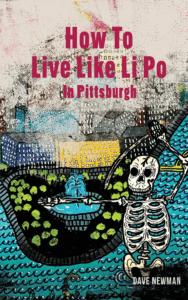
From the Publisher: "J.New Books proudly presents How to Live Like Li Po in Pittsburgh, the first-ever essay collection by acclaimed Read more
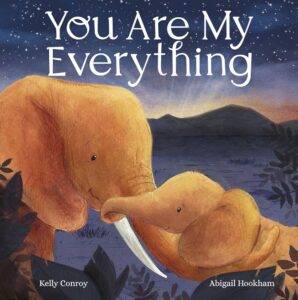
A lyrical and heartfelt tribute from a parent to their “everything,” their child. From the Publisher: "Following a parent and Read more

Could her Twitter Crush be her Prince Charming? From the Publisher: "A whirlwind romance. A heart-thumping new start. Widowed and Read more
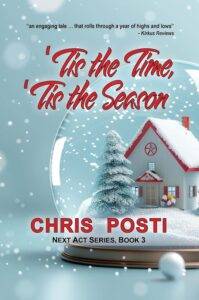
"Welcome to Christmastime at Port Mariette, where friendship, faith, and second chance romance weave together to transform a small town." Read more

Littsburgh has always been a “nights and weekends” passion project, ever since we started the site back in 2015. We Read more

"One doctor. One patient. One terrible lie." From the Publisher: "I used to have it all. My ex-boyfriend and I Read more

"Life on the streets is hard but it's deadly when a young woman battles addiction." From the Publisher: "Where is Read more

One impulsive decision changes the lives of two lifelong friends forever in a powerful novel of suspense by the USA Today bestselling Read more
