


Patti Smith is visiting Pittsburgh Arts and Lectures on Monday, October 10th!
Smith is the author of Just Kids, which won the National Book Award in 2010, M Train, and of five collections of poetry. Her seminal album Horses has been hailed as one of the top 100 albums of all time. In 2005, the French Ministry of Culture awarded Smith the title of Commandeur des Arts et des Lettres; she was inducted into the Rock and Roll Hall of Fame in 2007.
This event is sold out, but there is a wait list… we highly recommend putting your name down if you’d like to attend!
From the Publisher:
“From the National Book Award–winning author of Just Kids: an unforgettable odyssey of a legendary artist, told through the cafés and haunts she has worked in around the world. It is a book Patti Smith has described as ‘a roadmap to my life.’
M Train begins in the tiny Greenwich Village café where Smith goes every morning for black coffee, ruminates on the world as it is and the world as it was, and writes in her notebook. Through prose that shifts fluidly between dreams and reality, past and present, we travel to Frida Kahlo’s Casa Azul in Mexico; to the fertile moon terrain of Iceland; to a ramshackle seaside bungalow in New York’s Far Rockaway that Smith acquires just before Hurricane Sandy hits; to the West 4th Street subway station, filled with the sounds of the Velvet Underground after the death of Lou Reed; and to the graves of Genet, Plath, Rimbaud, and Mishima.”
 In 1965 I had come to New York City from South Jersey just to roam around, and nothing seemed more romantic than to write poetry in a Greenwich Village café. I finally got the courage to enter Caffè Dante on MacDougal Street. The walls were covered with printed murals of the city of Florence and scenes from The Divine Comedy.
A few years later I would sit by a low window that looked out into a small alley, reading Mrabet’s The Beach Café. A young fish-seller named Driss meets a reclusive, uncongenial codger who has a café with only one table and one chair on a rocky stretch of shore near Tangier. The slow-moving atmosphere surrounding the café captivated me. Like Driss, I dreamed of opening a place of my own: the Café Nerval, a small haven where poets and travelers might find the simplicity of asylum.
I imagined threadbare Persian rugs on wide-planked floors, two long wood tables with benches, a few smaller tables, and an oven for baking bread. No music no menus. Just silence black coffee olive oil fresh mint brown bread. Photographs adorning the walls: a melancholic portrait of the café’s namesake, and a smaller image of the forlorn poet Paul Verlaine in his overcoat, slumped before a glass of absinthe.
In 1978 I came into a little money and was able to pay a security deposit toward the lease of a one-story building on East Tenth Street. It had once been a beauty parlor but stood empty save for three white ceiling fans and a few folding chairs. My brother, Todd, and I whitewashed the walls and waxed the wood floors. Two wide skylights flooded the space with light. I spent several days sitting beneath them at a card table, drinking deli coffee and plotting my next move.
In the end I was obliged to abandon my café. Two years before, I had met the musician Fred Sonic Smith in Detroit. It was an unexpected encounter that slowly altered the course of my life. My yearning for him permeated everything—my poems, my songs, my heart. We endured a parallel existence, shuttling back and forth between New York and Detroit, brief rendezvous that always ended in wrenching separations. Just as I was mapping out where to install a sink and a coffee machine, Fred implored me to come and live with him in Detroit. I said goodbye to New York City and the aspirations it contained. I packed what was most precious and left all else behind. I didn’t mind. The solitary hours I’d spent drinking coffee at the card table, awash in the radiance of my café dream, were enough for me.
Some months before our first wedding anniversary Fred told me that if I promised to give him a child he would first take me anywhere in the world. I chose Saint-Laurent du Maroni, a border town in northwest French Guiana. I had long wished to see the remains of the French penal colony where hard-core criminals were once shipped before being transferred to Devil’s Island. In The Thief’s Journal Jean Genet had written of Saint-Laurent as hallowed ground and of its inmates with devotional empathy. He had ascended the ladder toward them: reform school, petty thief, and three-time loser; but as he was sentenced, the prison he’d held in such reverence was closed, the last living inmates returned to France. Genet served his time in Fresnes Prison. Devastated, he wrote: I am shorn of my infamy.
At 70, Genet was reportedly in poor health and most likely would never go to Saint-Laurent himself. I envisioned bringing him its earth and stone. Though often amused by my quixotic notions, Fred did not make light of this self-imposed task. He agreed without argument. I wrote a letter to William Burroughs, whom I had known since my early 20s. William, close to Genet and possessing his own romantic sensibility, promised to assist me in delivering the stones.
Preparing for our trip, Fred and I spent our days in the Detroit Public Library studying the history of Suriname and French Guiana. Fred bought maps, khaki clothing, traveler’s checks, and a compass; cut his long, lank hair; and bought a French dictionary. When he embraced an idea he looked at things from every angle. He did not read Genet, however. He left that up to me.
We flew on a Sunday to Miami and stayed for two nights in a roadside motel. We ate red beans and yellow rice in Little Havana and visited Crocodile World. The short stay readied us for the extreme heat we were about to face. In Grenada and Haiti, all passengers had to deplane while the hold was searched for smuggled goods. We finally landed in Suriname at dawn; a handful of young soldiers armed with automatic weapons waited as we were herded into a bus that transported us to a vetted hotel. The first anniversary of the 1980 military coup that overthrew the democratic government was looming: an anniversary just days before our own.
After a few days bending in the heat of the capital city of Paramaribo, a guide drove us 150 kilometers to the town of Albina on the west bank of the Maroni River bordering French Guiana. The pink sky was veined in lightning. Our guide found a young boy who agreed to take us across by pirogue, a long dugout canoe. We pushed off in a light rain that swiftly escalated into a torrential downpour. The boy handed me an umbrella and warned us not to trail our fingers in the water. I suddenly noticed the river teeming with tiny black fish. Piranha! He laughed as I quickly withdrew my hand.
In an hour or so the boy dropped us off at the foot of a muddy embankment. He dragged his pirogue onto land and joined some workers beneath a length of black oilcloth stretched over four wooden posts. They seemed amused by our momentary confusion and pointed us in the direction of the main road. As we struggled up a slippery knoll, the calypso beat of Mighty Swallow’s “Soca Dance” wafted from a boom box. We tramped through the empty town, finally taking cover in a bar. Two men were drinking Calvados. Fred engaged in a broken French-English conversation with a leathery-skinned fellow who presided over the nearby turtle reserves. As the rains subsided, the owner of the local hotel appeared, offering his services. Then a younger, sulkier version emerged to take our bags, and we followed them along a muddied trail down a hill to our lodgings. We had not even booked a hotel and yet a room awaited us.
The Hôtel Galibi was spartan yet comfortable. A small bottle of watered-down cognac and two plastic cups were set on the dresser. Spent, we slept, even as the returning rain beat relentlessly upon the corrugated tin roof. The morning sun was strong. I left our clothes to dry on the patio and spread the contents of our pockets on a small table: damp receipts, dismembered fruits, Fred’s ever-present guitar picks.
Around noon a cement worker drove us outside the ruins of the Saint-Laurent prison. There were a few stray chickens scratching in the dirt and an overturned bicycle, but no one seemed to be around. Our driver entered with us through a low stone archway and then just slipped away. The compound had the air of a tragically defunct boomtown. Fred and I moved about in alchemical silence, mindful not to disturb the reigning spirits.
In search of the right stones, I entered the solitary cells, examining the faded graffiti tattooing the walls. Hairy balls, cocks with wings, the prime organ of Genet’s angels. Not here, I thought. I looked around for Fred. He had found a small graveyard. I saw him paused before a headstone that read, “Son your mother is praying for you.” He stood there for a long time looking up at the sky. I left him alone and inspected the outbuildings, finally choosing the earthen floor of the mass cell to gather the stones. It was a dank place the size of a small airplane hangar. Heavy, rusted chains were anchored into the walls illuminated by slim shafts of light. Yet there was still some scent of life: manure, earth, and an array of scuttling beetles.
I dug a few inches seeking stones that might have been pressed by the hard-calloused feet of the inmates or the soles of heavy boots worn by the guards. I carefully chose three and put them in an oversize Gitanes matchbox, leaving the bits of earth clinging to them. Fred offered his handkerchief to wipe the dirt from my hands and then made a little sack for the matchbox. He placed it in my hands, the first step toward placing them in the hands of Genet.
We didn’t stay long in Saint-Laurent. We went seaside but the turtle reserves were off-limits, as they were spawning. Fred spent a lot of time in the bar, talking to the fellows. The men seemed to respect him, regarding him without irony. He had that effect on other men. I was content just sitting on a crate outside the bar staring down an empty street I had never seen and might never see again.
For the most part I kept to myself. Occasionally I caught glimpses of the maid, a barefoot girl with long, dark hair. She smiled and gestured but spoke no English. She tidied our room and washed our clothes. In gratitude I gave her one of my bracelets, a gold chain with a four-leaf clover, which I saw dangling from her wrist as we departed.
There was no rail service in French Guiana. The fellow from the bar had found us a driver, who carried himself like an extra in The Harder They Come with a cocked cap, aviator sunglasses, and a leopard-print shirt. We arranged a price and he agreed to drive us the 268 kilometers to Cayenne. He insisted our bags stay with him in the front seat of his beat-up tan Peugeot as chickens were normally transported in the trunk. We drove along Route Nationale, listening to reggae on a station riddled with static.
Every once in a while I untied the handkerchief to look at the Gitanes matchbox with its silhouette of a Gypsy posturing with her tambourine in a swirl of indigo-tinged smoke. But I did not open it. I pictured a small yet triumphal moment passing the stones to Genet. Fred held my hand as we wound through dense forests and passed short, sturdy Amerindians balancing iguanas squarely on their heads. We traveled through a tiny commune that had just a few houses and one six-foot crucifix. We asked the driver to stop. He got out and examined his tires. Fred took a photograph of the sign that read “Tonate. Population 9,” and I said a little prayer.
The primary mission accomplished, we had no ultimate destination; we were free. But as we approached Kourou we sensed a shift. We were entering a military zone and hit a checkpoint. The driver’s identity card was inspected and after an interminable stretch of silence we were ordered to get out of the car. Two officers searched the front and back seats, finding a switchblade with a broken spring in the glove box. That can’t be so bad, I thought, but as they knocked on the trunk our driver became markedly agitated. Dead chickens? Maybe drugs. They circled around the car, and then asked him for the keys. He threw them in a shallow ravine and bolted but was swiftly wrestled to the ground. I glanced sidelong at Fred. He betrayed no emotion and I followed his lead.
They opened the trunk. Inside was a man who looked to be in his early 30s curled up like a slug in a rusting conch shell. He seemed terrified as they poked him with a rifle and ordered him to get out. We were all herded to the police headquarters, put in separate rooms, and interrogated in French. The commander arrived, and we were brought before him. He was barrel-chested with dark, sad eyes and a thick mustache that dominated his careworn face. Fred quickly took stock of things. I slipped into the role of compliant female, for in this obscure annex of the Foreign Legion it was definitely a man’s world. I watched silently as the human contraband, stripped and shackled, was led away. Fred was ordered into the commander’s office. He turned and looked at me. Stay calm was the message telegraphed from his pale blue eyes.
An officer brought in our bags, and another wearing white gloves went through everything. I sat holding the handkerchief, relieved I was not asked to surrender it. An interrogator brought me a black coffee on an oval tray with an inlay of a blue butterfly and entered the commander’s office. I could see Fred’s profile. After a time they all came out. They seemed in amiable spirits. The commander gave Fred a manly embrace and we were placed in a private car. Neither of us said a word as we pulled into the capital city of Cayenne. Fred had the address of a hotel given to him by the commander. We were dropped off at the foot of a hill. It’s somewhere up there, the driver motioned, and we carried our bags up the stone steps.
—What did you two talk about? I asked.
—I really can’t say for sure, he only spoke French.
—How did you communicate?
—Cognac.
Fred seemed deep in thought.
—I know that you are concerned about the fate of the driver, he said, but it’s out of our hands. He placed us in real jeopardy and in the end my concern was for you.
—Oh, I wasn’t afraid.
—Yes, he said, that’s why I was concerned.
The hotel was to our liking. We drank French brandy from a paper sack and slept wrapped in layers of mosquito netting. In the morning we explored Cayenne. It was Carnival time, and the city was all but deserted. Overcrowded ferries departed for Devil’s Island. Calypso music poured from a mammoth disco in the shape of an armadillo. There were a few small souvenir stands with identical fare: thin, red blankets made in China and metallic blue raincoats. But mostly there were lighters, all kinds of lighters, with images of parrots, spaceships, and men of the Foreign Legion. There was nothing much to keep one there, yet we stayed in Cayenne until our anniversary as if bewitched.
On our last Sunday, women in bright dresses and men in top hats were celebrating the end of Carnival. Following their makeshift parade on foot, we ended up at Rémire-Montjoly, a commune southeast of the city. The revelers dispersed. Fred and I stood mesmerized by the emptiness of the long, sweeping beaches. It was a perfect day for our anniversary and I couldn’t help thinking it was the perfect spot for a beach café. Fred went on before me, whistling to a black dog somewhat up ahead. There was no sign of his master. Fred threw a stick into the water and the dog fetched it. I knelt down in the sand and sketched out plans for an imaginary café with my finger.
From the book M Train by Patti Smith, copyright © 2015, 2016 by Patti Smith. Published by arrangement with Vintage, an imprint of Knopf Doubleday, a division of Penguin Random House LLC.

From the Publisher: "In this “smart, irreverent secret history” (Stewart O’Nan) Sewickley set novel by highly praised Pittsburgh native author Anna Read more

From the Publisher: "In his debut collection of nonfiction, Jim Daniels writes about trees, backyard swing sets, above-ground swimming pools, Read more
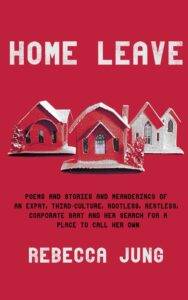
From the Publisher: "In 1958, a midwestern family was uprooted from Canton, Ohio to Bukavu in the Belgian Congo during Read more

From the Publisher: "It’s Anny’ s first day of middle school and, after years of being homeschooled, her first day Read more

ALL SKATE: True Stories from Middle Life is a series of musings from one mid-life woman, wife, and mother on what Read more
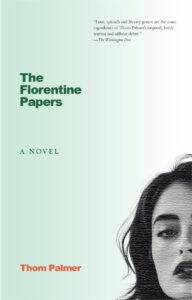
"Thom Palmer’s richly imagined first novel offers a hilarious yet bittersweet examination of food, art, and love..." From the Publisher: "When Read more
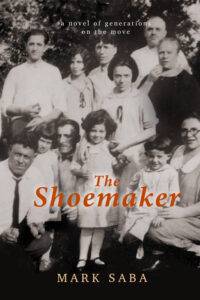
"A beautiful, poetic, ethereal read, The Shoemaker is the story of a great-grandfather and great-grandson connected by blood and by Read more

About the Author: Israel Centeno was born in 1958 in Caracas, Venezuela, and currently lives in Pittsburgh, he is a Read more

“I loved this book! Couldn’t put it down and neither will young readers. Girl power at its finest.” —Sharon G. Read more

"To those of us who have always suspected that our cats understand our words more than they let on, The Read more

From the Publisher: "When her father pulls her out of high school to care for her invalid mother and little Read more

“Ask the Wide World is not just a story but a journey of independent thinking and learning. It encourages children Read more
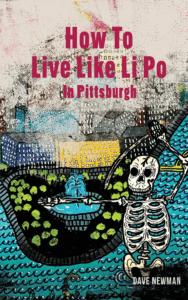
From the Publisher: "J.New Books proudly presents How to Live Like Li Po in Pittsburgh, the first-ever essay collection by acclaimed Read more

A lyrical and heartfelt tribute from a parent to their “everything,” their child. From the Publisher: "Following a parent and Read more

Could her Twitter Crush be her Prince Charming? From the Publisher: "A whirlwind romance. A heart-thumping new start. Widowed and Read more

"Welcome to Christmastime at Port Mariette, where friendship, faith, and second chance romance weave together to transform a small town." Read more

Littsburgh has always been a “nights and weekends” passion project, ever since we started the site back in 2015. We Read more

"One doctor. One patient. One terrible lie." From the Publisher: "I used to have it all. My ex-boyfriend and I Read more

"Life on the streets is hard but it's deadly when a young woman battles addiction." From the Publisher: "Where is Read more

One impulsive decision changes the lives of two lifelong friends forever in a powerful novel of suspense by the USA Today bestselling Read more
