
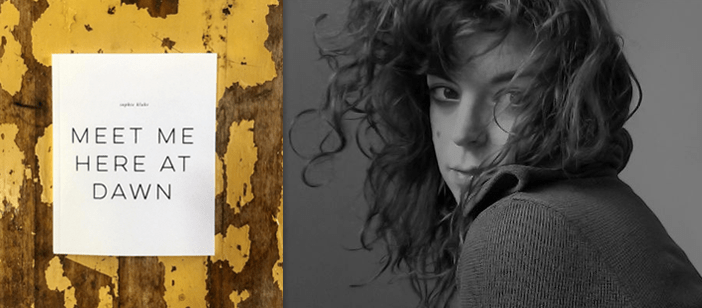
The poetry of Sophie Klahr has appeared in publications including American Poetry Review, Ploughshares and Harvard Review. She is the author of the chapbook _______ Versus Recovery (Pilot Books) and her recently released full-length collection, Meet Me Here At Dawn (YesYes Books). D.A. Powell describes her work as “poetry of immense vulnerability and fierce mettle; determined, convincing and heroically alive with courage of every kind,” and Terrance Hayes writes that the collection “blurs the boundary between taboo and convention, secrecy and privacy.”
Klahr’s poems unfold with unflinching examinations of faith, wonder, and accountability, crafting moments of desire, desperation, and awe with a mastery of precise detail and open space. Among her intensely personal, fiercely honest poems, sharp-eyed Pittsburghers will also appreciate occasional oblique and direct references to the city. In her new collection, for example, the guiding rivers in “To Cradle” are our own three rivers, and in _______ Versus Recovery, “In Which Pittsburgh” depicts gritty, wintry scenes in which the poem’s speaker wrestles with addiction.
From the publisher: Eroticism tinged with elegy, gratitude knit with doubt; Meet Me Here At Dawn contains an unmistakably open voice. Sophie Klahr’s debut poetry collection careens from hunger to hunger. With lyric energy and narrative determination, the poems are missives sent back from a threshold, chronicling disease, the unspoken pains of family, the fabric of an extra-marital affair. “What aperture makes a woman?” Klahr asks in “One Slaughter.” In Meet Me Here At Dawn, even the unanswerable is unfaltering, every question brightly wrought and necessary.
 Renée Alberts: What’s your connection to Pittsburgh?
Sophie Klahr: I grew up in Highland Park, pretty close to the reservoir, and moved back in Pittsburgh for a few years between college and grad school. At that time, I lived in Lawrenceville for a while, then in a big old Victorian place in Wilkinsburg that had been split into a few apartments. Looking back, the city still felt fairly un-gentrified—big empty factories were still standing in Lawrenceville and The Strip, and East Liberty didn’t have any of the corporate sheen I notice when I visit. It was kind of the heyday of the Quiet Storm and Shadow Lounge, and that main drag in Oakland hadn’t quite gotten so flattened by chain stores and restaurants. That said, I think Pittsburgh will always be a great city to live in as a creative person, and I can imagine moving back in a heartbeat. I read at the White Whale Bookstore last time I was home, and I’ve heard much about the Center for African American Poetry and Poetics. I’m grateful to know spaces like that are thriving. Some of my best creative guides still live in town—Jim Daniels was my informal mentor all throughout high school and college, and I visited one of Jim’s poetry classes at CMU when my book came out—it was wonderfully surreal.
Place is often a prominent feature in your poems. You describe settings, as many poets do, but you also directly refer to cities. Pittsburgh features prominently in _______ Versus Recovery. You currently share your time between LA and Nebraska. Those must feel like very different places, which I imagine affect you differently. How does place influence your writing?
I’m interested in how we move through the world, not just as people interacting with other people, but as beings operating within landscapes. _______ Versus Recovery contained a fairly dark vision of Pittsburgh, because the book chronicled time in the city when I was deep in an active addiction. The places I found myself in were tinged with a type of desperation, and sometimes with danger. My desires and interior landscape became the lens I moved through the city with—now I’ve been sober for some years, and I see and feel a very different city. I’m grateful to have experienced so many different pathways through Pittsburgh.
I think sometimes we suffer from an intense disconnection from the spaces we inhabit—I can’t remember the last time I saw a person alone in a coffee shop without a phone or a book or a computer in front of them, just sort of being there. It has to be so deliberate, the choice to simply be present somewhere.
My time spent in Nebraska is in part an attempt to simply be some place. I’ve come for a few years now to a residency here, and half of the book that I’m working on at present takes place in rural Nebraska. (A section of that will actually soon be in The New Yorker, which is totally bewildering.) The other half of this next book is a series of sonnets about driving through America and listening to the radio. I’ve spent about 35 days in total over the past few years driving mostly alone on various routes between Nebraska and the west coast in four- to six-day stints. That sort of transit time has a particular pressure to it, kind of crystallizing both the looking and the listening.
Sophie Klahr in conversation with Renée Alberts (Prosody, March 23, 2011):
It sounds like you find it easier to “simply be” in some places than others, and that Nebraska is one of those places. Your answer makes me think of the poem in Meet Me Here At Dawn, “One Slaughter,” in which a woman stops on the street to watch a bee in a city enshrouded in pollen and perceives the judgement of strangers watching her. The alienation I read into that image seems to draw some similar lines about place and city and nature and connection and alienation…
Totally. Here (I’m in Nebraska as we speak, as you know, where I’ve been since June), it’s common to encounter another being dying or living and to experience that completely alone. Having grown up in a city, I do have a heightened sense of this being-alone-with-other-not-human-beings. Yesterday there was a raccoon in a ditch breathing in a weird way. In a city, there might have been a sense of this animal being dirty… you might end up calling pest control or something like that, but here I just looked at it and left it alone and it was gone in the morning. Part of the pleasure of being and writing in this space is that I’m able to feel more a part of the cycle of animal and insect life. In LA, that experience is more rare, and when it does happen, it has a dream-like quality that is almost certainly shared with others—say, seeing a coyote loping down a residential street.
In the poem of mine you referenced, there is this sense of defiance. I remember kneeling down on the street to watch that bee, and feeling very weirdly broken about it, then realizing that someone on the sidewalk was watching me, and that moment when I chose not to stand up, to just turn away from their gaze. Society at large tells us that we shouldn’t be moved by certain things on a deep emotional level. A bee dying, say. But poets are porous, I think. Or at least the good ones are.
In Meet Me Here At Dawn, many of the poems openly discuss the details of an affair. How did you balance the intimacy of the narrative against the act of sharing it as a work of art? That dynamic creates a tension in the reading experience: I’m at once absorbed in the secretive events and aware of the craft of the poems as works of art. That tension arises often for artists—and increasingly for our culture in general, with the public self-representation of social media. What do we share; how much do we filter and craft; and where do these intersections between intimacy and exposure collide? How does that work for you as a writer, and in this collection in particular?
There are no fictional narratives in Meet Me Here At Dawn; writing real narratives about my life was a part of re-claiming space that I felt I’d given up, as a woman and a poet and a person who made a choice to live with what ended up being a destructive secret. It was important to me to share a narrative that made it clear I wasn’t some type of victim, a perspective which might’ve been easy for some to assume. Some of the intimate details of the affair are raw, but there is (I hope) no sense of anger or blame in the poems.
The person I had an affair with is also a poet, and the original drafts of the poems in Meet Me Here At Dawn were peppered with all sorts of what might’ve been identifying details—details that couldn’t be published unless I wanted to cause a ripple effect of pain. I actually combed through the poems many times over with my ex-lover, giving him the license to request an edit here and there. I eventually included only details of place and physicality that felt essential to me. I didn’t want this book to butcher our lives. I do feel that I have a social responsibility to be honest in my work, but I also have a personal responsibility to be kind. When I was initially revising early drafts, I was admittedly resentful at the cut life of so many details. But, I think the poems are better for their general moments, or so I hope.
Part of the effect of the choices you made about what details to include evoke this symbolic shorthand—the ring, the hotel, the phone calls—but it also creates this space of real immediacy—the bodies, the conversations. It creates an effect where the poems feel almost archetypal, which means that they feel relatable, as though the identities are fluid. And the honesty and clarity with which the moments are expressed create spaces where a reader can inhabit and embody and empathize. (That’s not really a question, I guess.)
I’m interested in the idea of re-claiming. The speaker in your poems is often conveying powerful agency. She’s often directing the scene, she’s setting the stage, telling the story, and using imperatives like, “draw a window / draw a door” or “Go on and make a bed in the grass.” Can you talk about the decision to use that voice?
I like your non-question—I’m glad that an archetypal vibe is coming through for you. Poetry kept me company as I was growing up, and I think the poems I related to the most were poems that were just general enough for me to see myself inside them, and just specific enough that I could feel exactly where I was.
Your observation about direction and scene-setting is interesting. I grew up doing musical theatre, went to CLO for years and years, took classes at Point Park, and even did CMU’s pre-college musical theatre program. When I initially went to college, it was as a musical theatre major; poetry was something that happened privately for me, but I mostly wanted to be on Broadway. I have a deep love and respect for theatre, and I know that my theatre-related instincts and interests are often engaged in this book. There are references to a movie being made, references to characters and scene-making, even reference to Aristotle’s Poetics. The type of reclamation in a directorial voice is empowering. It makes me think of a line from Old Rosa by the Cuban writer Reinaldo Arenas. The main character is in one of Castro’s prison camps for homosexuals that existed in the 1960’s, and he says that “what you have to do is overlay the image of what you’re suffering with the image, the real image, of what you most desire…” I think the poems do this in some way—direct the reader to both the actuality, the beauty, and the brokenness of what the book moves through. Life is messy, and people make assumptions. All forms of art give the maker a measure of power to direct a gaze, and then the looker/listener/receiver gets to process that information however they will. I think the directorial voice is also a part of how I’ve been able to process difficult experiences. In those poems, I’m also directing myself in some way, slowly dismantling those experiences in an attempt to really look at them.
As you mentioned, you work in other art forms: dance and choreography, photography and self portrait, drawing. Do you find that the various disciplines are in conversation with one another? Do you go to different mediums for different reasons?
All writers know that language fails, all the time. It’s nice to have a breath. When I draw, it’s all cartoons, completely silly stuff. I make a lot of comics for my parents, but that’s about it. With dance, I get to stop thinking about how to translate a feeling or sight or fact into a word; when I dance, I’m not thinking about synonyms for once! From around ages 7 to 12, I went to the Pittsburgh Ballet Theatre School, which taught me a lot about poise. I’m grateful for the sense of ballet I have in my bones now. I end up writing often in meter, which sometimes stays and sometimes washes away in revision, but I think that the metrical leaning came in part from growing up in that rigorous physical setting, where rhythm and accent were central concerns, and from those muscular and tightly wound spaces, extension and a kind of weightlessness could emerge. I’d like to collaborate with more dancers—they have an inherent sense of poetry about them. In my later years in Pittsburgh, I took great classes with dancers from the Balafon West African Dance Ensemble, Chrisala Brown and Mama K [Mama Kadiatou Conte-Forte], who is the artistic director for the company. I think they still teach classes locally! In Los Angeles, I have a couple of incredible teachers at a studio called The Sweat Spot—Melissa Schade and Tess Hewlett in particular, who are both such joyful and inclusive and bright spirits. Poetry is lonely, and dancing is anything but.
Speaking of being inspired by other mediums, “Meet Me Here At Dawn” is the name of a Cass McCombs song that you used for your book title. How did you make the decision to use that?
There’s actually no poem anywhere in my book by that title; the phrase doesn’t appear at all… I’ve never even written a poem with that phrase in it. I guess at the time when I was working on the book, no title was leaping to me. Cass is a friend (I live at his house sometimes in California), and listening to that song of his one day, the phrase just seemed to have the right sound. “Meet me here at dawn” is the kind of colloquialism you might encounter in a movie about cowboys or in a beach read or a comic book. It’s a gauntlet, an open palm, a challenge, a plea. It’s precise. It has everything to do with time—dawn is a liminal moment: both the last moment where one can move unseen, and the moment it is light enough for work to start. In Cass’ song, one of the lyrics goes “I’m gone as light is shot / whether you come or not.” Meet Me Here At Dawn, as my book, is the act of standing at a threshold, before the inevitable crossing.
And what about other writers, other poets? Who are you reading right now?
I’m reading this amazing journal called Neck, edited by Ryan Paradiso (whose one piece of writing I can find online is stunning). Every piece of writing in Neck chimes with me. There’s only one volume of the journal, and it’s print-only. I think it might be a must-have. I’m also reading a book by Werner Herzog called Conquest of the Useless, which is basically his interior landscape during the filming of his movie Fitzcarraldo. It’s a very strange read. I’m always reading Carl Phillips, and returned to some of Octavio Paz’s work this summer. I recently read Sara Eliza Johnson’s poetry collection Bone Map, which is chilling and graceful, and Chloe Honum’s books are top on my to-read list. What are you reading?
About Renée Alberts: Renée Alberts’ poetry, music, and visual art appear in print, dance performances, live radio shows, and at least one tattoo. She is author of the poetry collections No Water and As They Fall and editor of Natural Language, an anthology of the Carnegie Library of Pittsburgh reading series she founded. She has also guest hosted Prosody on NPR affiliate 90.5 WESA-FM. As Animoon Workshop, she and co-founder Cathie Coleman create jewelry and collage to inspire your inner animal.
From the Publisher: "In this “smart, irreverent secret history” (Stewart O’Nan) Sewickley set novel by highly praised Pittsburgh native author Anna Read more
New York, NY — The Community of Literary Magazines & Presses (CLMP), the national nonprofit organization that for 58 years Read more
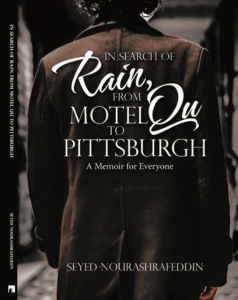
From the Publisher: "Imagine that you are a child who was born in a large family, and during your childhood, Read more

From Mt. Lebanon Magazine by way of Facebook: "On February 18, the Mt. Lebanon Public Library Board of Trustees passed Read more
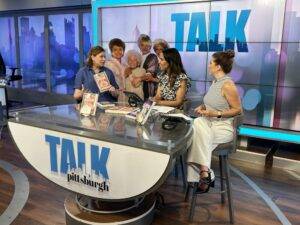
Littsburgh's founder Rachel Ekstrom Courage (now a New York Times and USA Today bestselling author!) recently stopped by KDKA to Read more

"The Drue Heinz Literature Prize recognizes and supports writers of short fiction and makes their work available to readers around Read more

"Applications are now open for Read Local Eat Local 2025! This is event is on Saturday, September 6, from 11 Read more
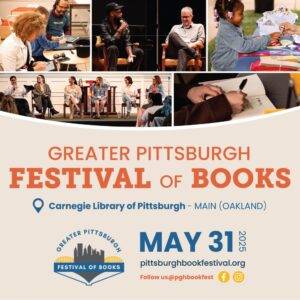
PITTSBURGH, PA – It’s time to book your spot! Registration for the 2025 Greater Pittsburgh Festival of Books is officially Read more
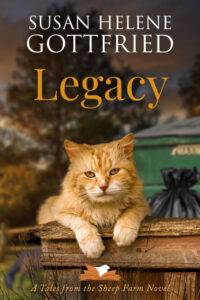
From the Publisher: "The Mackenzies and the Flahertys, two of the founding families of Port Kenneth, TN, have been feuding Read more
"The Northern Appalachia Review welcomes submissions of poetry, fiction, and nonfiction written about, representing, or engaging with the experience of Read more
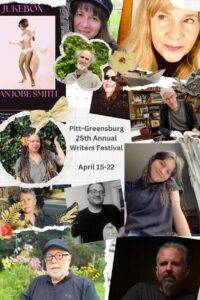
But this too is true: stories can save us The writer Tim O’Brien calls storytelling an essential human activity. "The Read more
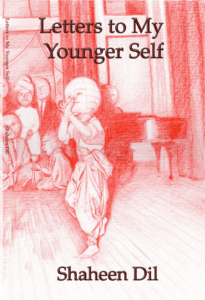
"'Where do you end and I begin?' is the question which haunts Shaheen Dil’s remarkable memoir-in-poems. Dil’s journey is at Read more
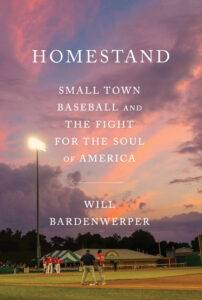
"A poignant memoir exploring small town baseball as a lens into what’s right and wrong with modern America—written by an Read more
City of Asylum Pittsburgh and International Cities of Refuge Network (ICORN) collaborate to present 30+ free,transformational events over 4 days Read more
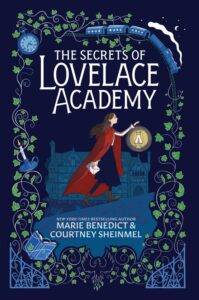
"From New York Times bestselling author Marie Benedict and Courtney Sheinmel comes a historical adventure about a young girl plucked Read more
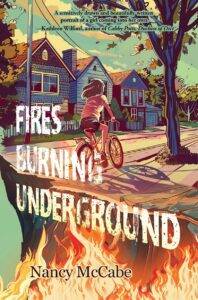
From the Publisher: "It’s Anny’ s first day of middle school and, after years of being homeschooled, her first day Read more

"A light snow fell on January 30, 2005, a typical cold Pittsburgh winter morning. Inside Calvary, the congregation had gathered Read more
We are so excited to help spread the word about the excellent Woolly Bear Books and Gifts in Carnegie, PA Read more
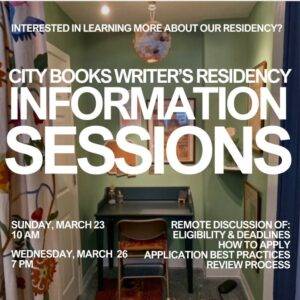
"If you have considered applying to the CBWR, or have applied in the past and not been selected, this remote, Read more

We're happy to share that Pittsburgh's International Poetry forum is sharing their latest events and performances on YouTube, where you Read more
