

Littsburgh is thrilled to be able to share with you this excerpt from Far from the Tree: Parents, Children, and the Search for Identity by Andrew Solomon, the National Book Award–winning and New York Times bestselling author of The Noonday Demon: An Atlas of Depression. Solomon will be visiting Pittsburgh Arts and Lectures on Monday, December 7th to talk about this powerful book, family, parenting, and what it means to be human.
The below passage is published here with permission by Scribner, a Division of Simon & Schuster, Inc.
An excerpt from Chapter One: Son
 There is no such thing as reproduction. When two people decide to have a baby, they engage in an act of production, and the widespread use of the word reproduction for this activity, with its implication that two people are but braiding themselves together, is at best a euphemism to comfort prospective parents before they get in over their heads. In the subconscious fantasies that make conception look so alluring, it is often ourselves that we would like to see live forever, not someone with a personality of his own. Having anticipated the onward march of our selfish genes, many of us are unprepared for children who present unfamiliar needs. Parenthood abruptly catapults us into a permanent relationship with a stranger, and the more alien the stranger, the stronger the whiff of negativity. We depend on the guarantee in our children’s faces that we will not die. Children whose defining quality annihilates that fantasy of immortality are a particular insult; we must love them for themselves, and not for the best of ourselves in them, and that is a great deal harder to do. Loving our own children is an exercise for the imagination.
Yet blood, in modern as in ancient societies, is thicker than water. Little is more gratifying than successful and devoted children, and few situations are worse than filial failure or rejection. Our children are not us: they carry throwback genes and recessive traits and are subject right from the start to environmental stimuli beyond our control. And yet we are our children; the reality of being a parent never leaves those who have braved the metamorphosis. The psychoanalyst D. W. Winnicott once said, “There is no such thing as a baby—meaning that if you set out to describe a baby, you will find you are describing a baby and someone. A baby cannot exist alone but is essentially part of a relationship.” Insofar as our children resemble us, they are our most precious admirers, and insofar as they differ, they can be our most vehement detractors. From the beginning, we tempt them into imitation of us and long for what may be life’s most profound compliment: their choosing to live according to our own system of values. Though many of us take pride in how different we are from our parents, we are endlessly sad at how different our children are from us.
Because of the transmission of identity from one generation to the next, most children share at least some traits with their parents. These are vertical identities. Attributes and values are passed down from parent to child across the generations not only through strands of DNA, but also through shared cultural norms. Ethnicity, for example, is a vertical identity. Children of color are in general born to parents of color; the genetic fact of skin pigmentation is transmitted across generations along with a self-image as a person of color, even though that self-image may be subject to generational flux. Language is usually vertical, since most people who speak Greek raise their children to speak Greek, too, even if they inflect it differently or speak another language much of the time. Religion is moderately vertical: Catholic parents will tend to bring up Catholic children, though the children may turn irreligious or convert to another faith. Nationality is vertical, except for immigrants. Blondness and myopia are often transmitted from parent to child, but in most cases do not form a significant basis for identity—blondness because it is fairly insignificant, and myopia because it is easily corrected.
[bctt tweet=”Read an excerpt of Far from the Tree by @Andrew_Solomon courtesy of @ScribnerBooks (@PghArtsLectures 12/7)”]Often, however, someone has an inherent or acquired trait that is foreign to his or her parents and must therefore acquire identity from a peer group. This is a horizontal identity. Such horizontal identities may reflect recessive genes, random mutations, prenatal influences, or values and preferences that a child does not share with his progenitors. Being gay is a horizontal identity; most gay kids are born to straight parents, and while their sexuality is not determined by their peers, they learn gay identity by observing and participating in a subculture outside the family. Physical disability tends to be horizontal, as does genius. Psychopathy, too, is often horizontal; most criminals are not raised by mobsters and must invent their own treachery. So are conditions such as autism and intellectual disability. A child conceived in rape is born into emotional challenges that his own mother cannot know, even though they spring from her trauma.
In 1993, I was assigned to investigate Deaf culture for the New York Times. My assumption about deafness was that it was a deficit and nothing more. Over the months that followed, I found myself drawn into the Deaf world. Most deaf children are born to hearing parents, and those parents frequently prioritize functioning in the hearing world, expending enormous energy on oral speech and lipreading. Doing so, they can neglect other areas of their children’s education. While some deaf people are good at lipreading and produce comprehensible speech, many do not have that skill, and years go by as they sit endlessly with audiologists and speech pathologists instead of learning history and mathematics and philosophy. Many stumble upon Deaf identity in adolescence, and it comes as a great liberation. They move into a world that validates Sign as a language and discover themselves. Some hearing parents accept this powerful new development; others struggle against it.
The whole situation felt arrestingly familiar to me because I am gay. Gay people usually grow up under the purview of straight parents who feel that their children would be better off straight and sometimes torment them by pressing them to conform. Those gay people often discover gay identity in adolescence or afterward, finding great relief there. When I started writing about the deaf, the cochlear implant, which can provide some facsimile of hearing, was a recent innovation. It had been hailed by its progenitors as a miraculous cure for a terrible defect and was deplored by the Deaf community as a genocidal attack on a vibrant community. Both sides have since moderated their rhetoric, but the issue is complicated by the fact that cochlear implants are most effective when they are surgically implanted early—in infants, ideally—so the decision is often made by parents before the child can possibly have or express an informed opinion. Watching the debate, I knew that my own parents would gamely have consented to a parallel early procedure to ensure that I would be straight, had one existed. I do not doubt that the advent of such a thing even now could wipe out most of gay culture. I am saddened by the idea of such a threat, and yet as my understanding of Deaf culture deepened, I realized that the attitudes I had found benighted in my parents resembled my own likely response to producing a deaf child. My first impulse would have been to do whatever I could to fix the abnormality.
Then a friend had a daughter who was a dwarf. She wondered whether she should bring up her daughter to consider herself just like everyone else, only shorter; whether she should make sure her daughter had dwarf role models; or whether she should investigate surgical limb-lengthening. As she narrated her bafflement, I saw a familiar pattern. I had been startled to note my common ground with the Deaf, and now I was identifying with a dwarf; I wondered who else was out there waiting to join our gladsome throng. I thought that if gayness, an identity, could grow out of homosexuality, an illness, and Deafness, an identity, could grow out of deafness, an illness, and if dwarfism as an identity could emerge from an apparent disability, then there must be many other categories in this awkward interstitial territory. It was a radicalizing insight. Having always imagined myself in a fairly slim minority, I suddenly saw that I was in a vast company. Difference unites us. While each of these experiences can isolate those who are affected, together they compose an aggregate of millions whose struggles connect them profoundly. The exceptional is ubiquitous; to be entirely typical is the rare and lonely state.
As my parents had misapprehended who I was, so other parents must be constantly misapprehending their own children. Many parents experience their child’s horizontal identity as an affront. A child’s marked difference from the rest of the family demands knowledge, competence, and actions that a typical mother and father are unqualified to supply, at least initially. The child is expressly different from most of his or her peers as well, and therefore broadly less understood or accepted. Abusive fathers visit less abuse on children who resemble them physically; if you are born to a bully, pray that you bear his features. Whereas families tend to reinforce vertical identities from earliest childhood, many will oppose horizontal ones. Vertical identities are usually respected as identities; horizontal ones are often treated as flaws.
One could argue that black people face many disadvantages in the United States today, but there is little research into how gene expression could be altered to make the next generation of children born to black parents come out with straight, flaxen hair and creamy complexions. In modern America, it is sometimes hard to be Asian or Jewish or female, yet no one suggests that Asians, Jews, or women would be foolish not to become white Christian men if they could. Many vertical identities make people uncomfortable, and yet we do not attempt to homogenize them. The disadvantages of being gay are arguably no greater than those of such vertical identities, but most parents have long sought to turn their gay children straight. Anomalous bodies are usually more frightening to people who witness them than to people who have them, yet parents rush to normalize physical exceptionalism, often at great psychic cost to themselves and their children. Labeling a child’s mind as diseased—whether with autism, intellectual disabilities, or transgenderism—may reflect the discomfort that mind gives parents more than any discomfort it causes their child. Much gets corrected that might better have been left alone.
Defective is an adjective that has long been deemed too freighted for liberal discourse, but the medical terms that have supplanted it–illness, syndrome, condition–can be almost equally pejorative in their discreet way. We often use illness to disparage a way of being, and identity to validate that same way of being. This is a false dichotomy. In physics, the Copenhagen interpretation defines energy/matter as behaving sometimes like a wave and sometimes like a particle, which suggests that it is both, and posits that it is our human limitation to be unable to see both at the same time. The Nobel Prize–winning physicist Paul Dirac identified how light appears to be a particle if we ask a particle-like question, and a wave if we ask a wavelike question. A similar duality obtains in this matter of self. Many conditions are both illness and identity, but we can see one only when we obscure the other. Identity politics refutes the idea of illness, while medicine shortchanges identity. Both are diminished by this narrowness.
Physicists gain certain insights from understanding energy as a wave, and other insights from understanding it as a particle, and use quantum mechanics to reconcile the information they have gleaned. Similarly, we have to examine illness and identity, understand that observation will usually happen in one domain or the other, and come up with a syncretic mechanics. We need a vocabulary in which the two concepts are not opposites, but compatible aspects of a condition. The problem is to change how we assess the value of individuals and of lives, to reach for a more ecumenical take on healthy. Ludwig Wittgenstein said, “All I know is what I have words for.” The absence of words is the absence of intimacy; these experiences are starved for language.
The children I describe here have horizontal conditions that are alien to their parents. They are deaf or dwarfs; they have Down syndrome, autism, schizophrenia, or multiple severe disabilities; they are prodigies; they are people conceived in rape or who commit crimes; they are transgender. The timeworn adage says that the apple doesn’t fall far from the tree, meaning that a child resembles his or her parents; these children are apples that have fallen elsewhere—some a couple of orchards away, some on the other side of the world. Yet myriad families learn to tolerate, accept, and finally celebrate children who are not what they originally had in mind. This transformative process is often eased and sometimes confounded by identity politics and medical progress—both of which have infiltrated households to a degree that would have been inconceivable even twenty years ago.
All offspring are startling to their parents; these most dramatic situations are merely variations on a common theme. Much as we learn the properties of a medication by studying its effect at extremely high doses, or look at the viability of a construction material by exposing it to unearthly supertemperatures, so we can understand the universal phenomenon of difference within families by looking at these extreme cases. Having exceptional children exaggerates parental tendencies; those who would be bad parents become awful parents, but those who would be good parents often become extraordinary. I take the anti-Tolstoyan view that the unhappy families who reject their variant children have much in common, while the happy ones who strive to accept them are happy in a multitude of ways.
Because prospective parents have ever-increasing options to choose against having children with horizontal challenges, the experiences of those who have such children are critical to our larger understanding of difference. Parents’ early responses to and interactions with a child determine how that child comes to view himself. These parents are also profoundly changed by their experiences. If you have a child with a disability, you are forever the parent of a disabled child; it is one of the primary facts about you, fundamental to the way other people perceive and decipher you. Such parents tend to view aberrance as illness until habituation and love enable them to cope with their odd new reality—often by introducing the language of identity. Intimacy with difference fosters its accommodation.
Broadcasting these parents’ learned happiness is vital to sustaining identities that are now vulnerable to eradication. Their stories point a way for all of us to expand our definitions of the human family. It’s important to know how autistic people feel about autism, or dwarfs about dwarfism. Self-acceptance is part of the ideal, but without familial and societal acceptance, it cannot ameliorate the relentless injustices to which many horizontal identity groups are subject and will not bring about adequate reform. We live in xenophobic times, when legislation with majority support abrogates the rights of women, LGBT people, illegal immigrants, and the poor. Despite this crisis in empathy, compassion thrives at home, and most of the parents I have profiled love across the divide. Understanding how they came to think well of their own children may give the rest of us motive and insight to do the same. To look deep into your child’s eyes and see in him both yourself and something utterly strange, and then to develop a zealous attachment to every aspect of him, is to achieve parenthood’s self-regarding, yet unselfish, abandon. It is astonishing how often such mutuality has been realized—how frequently parents who had supposed that they couldn’t care for an exceptional child discover that they can. The parental predisposition to love prevails in the most harrowing of circumstances. There is more imagination in the world than one might think.
Excerpted from FAR FROM THE TREE: Parents, Children, and the Search for Identity. Copyright © 2012 by Andrew Solomon. Excerpted with permission by Scribner, a Division of Simon & Schuster, Inc.
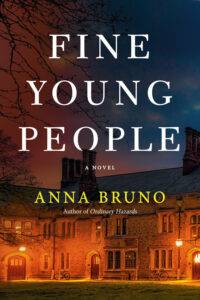
From the Publisher: "In this “smart, irreverent secret history” (Stewart O’Nan) Sewickley set novel by highly praised Pittsburgh native author Anna Read more
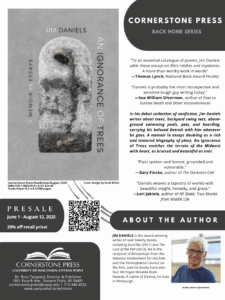
From the Publisher: "In his debut collection of nonfiction, Jim Daniels writes about trees, backyard swing sets, above-ground swimming pools, Read more
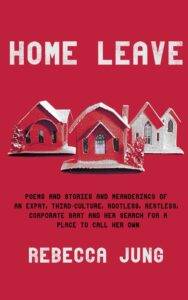
From the Publisher: "In 1958, a midwestern family was uprooted from Canton, Ohio to Bukavu in the Belgian Congo during Read more
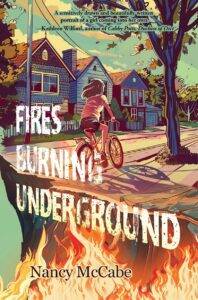
From the Publisher: "It’s Anny’ s first day of middle school and, after years of being homeschooled, her first day Read more
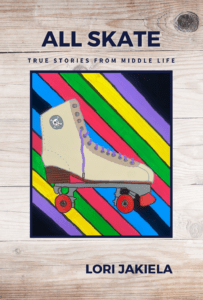
ALL SKATE: True Stories from Middle Life is a series of musings from one mid-life woman, wife, and mother on what Read more
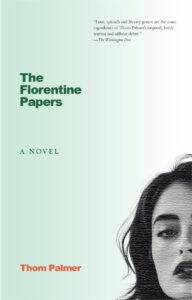
"Thom Palmer’s richly imagined first novel offers a hilarious yet bittersweet examination of food, art, and love..." From the Publisher: "When Read more
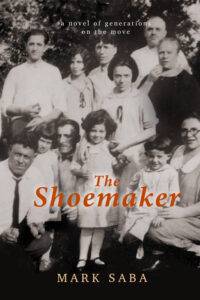
"A beautiful, poetic, ethereal read, The Shoemaker is the story of a great-grandfather and great-grandson connected by blood and by Read more

About the Author: Israel Centeno was born in 1958 in Caracas, Venezuela, and currently lives in Pittsburgh, he is a Read more

“I loved this book! Couldn’t put it down and neither will young readers. Girl power at its finest.” —Sharon G. Read more

"To those of us who have always suspected that our cats understand our words more than they let on, The Read more

From the Publisher: "When her father pulls her out of high school to care for her invalid mother and little Read more
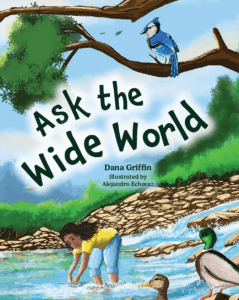
“Ask the Wide World is not just a story but a journey of independent thinking and learning. It encourages children Read more
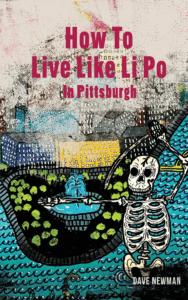
From the Publisher: "J.New Books proudly presents How to Live Like Li Po in Pittsburgh, the first-ever essay collection by acclaimed Read more
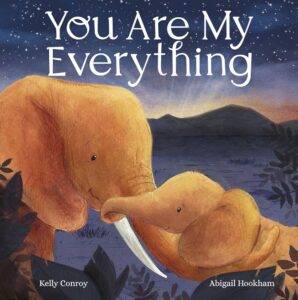
A lyrical and heartfelt tribute from a parent to their “everything,” their child. From the Publisher: "Following a parent and Read more
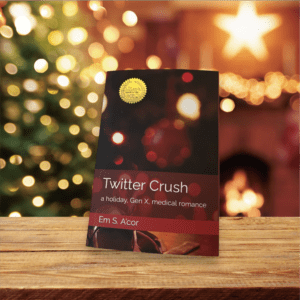
Could her Twitter Crush be her Prince Charming? From the Publisher: "A whirlwind romance. A heart-thumping new start. Widowed and Read more
"Welcome to Christmastime at Port Mariette, where friendship, faith, and second chance romance weave together to transform a small town." Read more

Littsburgh has always been a “nights and weekends” passion project, ever since we started the site back in 2015. We Read more

"One doctor. One patient. One terrible lie." From the Publisher: "I used to have it all. My ex-boyfriend and I Read more
"Life on the streets is hard but it's deadly when a young woman battles addiction." From the Publisher: "Where is Read more

One impulsive decision changes the lives of two lifelong friends forever in a powerful novel of suspense by the USA Today bestselling Read more
